Random Thoughts of a Catholic Husband, Father, Physician, Licensed Commercial Septic System Operator, Driving Instructor, Tractor Mechanic, Gardener, Deliverer of All Foods Carry-out, Amateur Book Reviewer, Neo-Texan, Novice Chicken Rancher, Beekeeper, and Writer of Really, Really Bad Poetry. I try to live up to Chesterton's observation that 'a thing worth doing is worth doing badly.'
Sensitive Sam is a cute little book about a little boy with Sensory Processing Disorder (SPD). Every page consists of a quatrain describing events in the life of a child who is having trouble dealing with things which don't bother most people. Mrs. Roth-Fisch completes the book with her excellent illustrations of Sam as he deals with dressing, eating, and going to school. Sam begins working with an occupational therapist, and with some changes in his routine at home and school, he is soon learning to grow and learn in school.
This book is excellent on several levels. First, it could help the child with SPD see that others have the same challenges, and that they can be overcome. Second, this book could help explain to other children in Sam's family - or class - what SPD is, and how they could help their sibling or friend. This book will help all children understand that SPD should not be frightening, and that it is treatable with a bit of work, and a lot of love.
This book reminded me of some of the issues we had with Theodore, such as his preference for only wearing short pants. This was not a big problem when we lived in San Antonio, and while he was young, but after moving up to the Dallas/Fort Worth area it took a while to get him accustomed to wearing long pants. He also had a lot of food preferences; vegetables were a challenge for him, and he ate ketchup with just about everything. Just like Sam, Theodore managed with a lot of patience and love - especially from Carolyn.
The end of the book has a glossary and a list of websites for those interested in reading more about Sensory Processing Disorder. I recommend this book without reservation for those families with a child with SPD, and also for grade schools.
Today I found one of the holy cards from Theodore's funeral in a book which Carolyn was reading. And so once again today, for the umpteenth time, I asked God why it pleased Him to take our son away from us.
The only thing which came to me were the words from the Chaplet of Divine Mercy, where it says that God's Will is 'Love and Mercy Itself.' All I could think was that Theodore's death was permitted for the good of the souls of his family.
What I Wish I'd Known about Raising a Child with Autism: A Mom and a Psychologist Offer Heartfelt Guidance for the First Five Years Future Horizons (2011)
Actually, this is a book PREVIEW. This book will be available soon.
Before starting, I must make a few disclaimers. One is that I was asked to preview this book by the author. I was delighted to be asked and am not receiving any type of compensation for this blog entry. Second, although I am a physician, I do not practice any specialty which addresses the diagnosis and management of autism; however, I do have a lot of experience with autistic children. As a pediatric anesthesiologist, I care for autistic children who require anesthesia for surgical, dental, and other procedures. More importantly, as a parent, I was blessed with an autistic child for fifteen years. Carolyn and I were blessed with our third son, Theodore, who passed away in April, 2008. This experience, as Bobbie Sheahan would say, does not make me an expert, but does help when reviewing this book.
In addition, this book represents my views and not those of my employer. What I Wish I’d Known About Raising a Child With Autism was written by Bobbi Sheahan, a lawyer who is presently a stay at home mom, and Kathy DeOrnellas, Ph.D., a psychologist who treats autistic children. Mrs. Sheahan has a daughter, Grace, with Autism Spectrum Disorder (ASD) who is now seven years old. This book was inspired by the many challenges she faced in searching for a diagnosis as well as a treatment for Grace. This book was written to help those parents who are beginning to notice that one of their children appears to be ‘different‘ and don't know what to do about it. As Bobbi Sheahan says in the preface, “we are here to hold your hand as you walk through a door that you and your child didn’t choose....” Another reason for writing this book was to reassure parents who may feel overwhelmed with the behavior of an autistic child. To finish the sentence quoted above, “...come on in, there are lots of us here waiting for you.”
This book consists of thirteen chapters, and both authors contribute separately to each chapter. Mrs. Sheahan writes mainly from her own experience and research in dealing with Grace, while Dr. DeOrnellas provides her expert opinion to corroborate what Mrs. Sheahan has stated. I really appreciated this; especially when references cited in are listed at the end of each chapter. I don’t like reading things where it appears that data has been ‘pulled out of midair.’
The first three chapters deal with the basics of autism. In chapter one, Mrs. Sheahan relates some of her family background as well as the circumstances of her pregnancy and birth of Grace. She describes how Grace was different from her older sister, how she was quiet and easier to manage as an infant. Chapter two is all by Dr. DeOrnellas, with terminology and statistics discussed, including the cost for the treatment of autism. That was rather sobering. In chapter three, Mrs. Sheahan begins to realize that Grace is different, and talks about the difficulty of coming to grips with having a child who is not considered normal. Finding a professional who could help her was very difficult, and the lessons learned from that effort are discussed in this chapter as well.
Chapter four has a section in it called ‘a completely non-scientific discussion of the origins of autism, with no conclusions reached.’ This is a good description for this chapter. Some of the theories mentioned are very thought-provoking.
After this journey into the theoretical, the fifth chapter delves into the practical - and sometimes unsavory - aspects of parenting an autistic child. Food preferences and abnormalities, such as pica are discussed, as are challenges with maintaining good oral hygiene. The extensive efforts needed to childproof an autistic child’s house reminds me that raising an autistic child involves all members of the household, especially the siblings.
Chapters six, seven, and eight deal with some of the more striking characteristics of autistic children. Communication and social skills, pain tolerance issues, and the need for a routine are all discussed. Here, Mrs. Sheahan makes a recommendation which I think should have come at the start of the book: keep a journal. This is a great idea, for any parent, but especially for parents of children with autism. Chapter eight also contains some great insight into the mind of an autistic child:
“What the books of Temple Grandin and many conversations with Dr. DeOrnellas taught me was that much of Grace’s behavior is motivated by anxiety. I started to write “inexplicable behavior,” but it’s quite explicable; I just need to apply myself to learning my child’s language. She speaks more with actions than in words, and she doesn’t do things just to frustrate or confuse me. She does things for a reason, and if I am respectful of the fact that the reasons are perfectly reasonable to her, I just might learn what that reason is.”
This is still good advice.
Chapters nine, ten and eleven deal with education issues, siblings - especially sibling rivalry issues, friendships, and dealing with the world in general. I had to laugh when Dr. DeOrnellas was discussing animal therapy with autistic children and mentioned a family who had moved from California to North Texas and expected that their child would be able to continue ‘dolphin therapy.’
Chapter twelve is for parents, especially mothers. Mrs. Sheahan makes the point that one parent cannot do this alone; husbands have to be involved in the care of an autistic child. Other means for help are out there as well, but none is as important as the love between and husband and a wife directed toward the care of their children.
There is No Finish Line is the title of the final chapter, which points out that raising an autistic child will probably never end. They may never be able to leave your care. This thought kept going through my mind as I read this book, for the Sheahan family has not gone through that time of life known as adolescence with an autistic child.
In chapter twelve, Mrs. Sheahan mentions one of the greatest blessings of having an autistic child, one which I have seen in our own life:
“One of the major upsides of our situation is that we have the nicest people in our lives because everyone else has fled.”
It’s true. Some people can’t deal with someone else’s autistic child, and those who can are really practicing charity. Mrs. Sheahan gives many examples of people who understand it when Grace does odd things, or when the whole family has to leave a party or other social engagement suddenly. Those people really reflect the face of Christ when they let someone like Grace into their lives.
I liked this book. I liked the organization of it, as it went from Grace’s birth, early development, and growth. Along the way, the various challenges which autism brings to life were discussed, including Dr. DeOrnellas’ input as a professional. This gave credence to Mrs. Sheahan’s observations. I appreciated the references at the end of each chapter, and the bibliography at the end of the book gives many great suggestions for further reading.
One thing that took a while for me to get used to was Mrs. Sheahan’s sense of humor. There were times when I thought it was a bit much for such a serious subject. After reading half of the book, I decided to step back a moment and stop thinking about why I did not care for her humorous remarks, and instead ask myself why she included humor in this book. The answer came, almost instantaneously, that something as daunting as raising an autistic child requires that a parent keep a sense of humor. There are enough tears and heartaches in raising a ‘normal‘ child, let alone one with autism, and humor provides a tremendous consolation.
I would recommend this book without reservation. It serves as a good book for those who are considering that their child may be autistic, or have children newly diagnosed as autistic. This book would be a good beginner book for parents who want to know about autism, and a great source for further reading on the subject.
I have tried (unsuccessfully) to write this review without bringing my own experience as a father of an autistic child into it. Now that the review is over, I will break that vow. While reading this book, I was reminded of so many things which Theodore did, and how hard it was to deal with him at times. But more often, I recall the things he did which gave us a laugh, or great joy. He really loved to make us laugh. With time, the memories of the heartaches fade more than the laughter. For us, the ‘Finish Line‘ was at fifteen with Theodore, which ended suddenly on a Thursday morning in April, 2008. For those of you with autistic children, I want to tell you that there really is only one thing harder than living with the cross of an autistic child: living without him.
I recently discovered that Henryk Mikolaj Gorecki died on November 12, 2010. May his soul, and all the souls of the Faithful Departed, rest in peace.
Henryk Gorecki, born in 1933, was a Catholic Polish composer of what some refer to as contemporary classical music. I don't know enough about music to have an opinion about the kind of music he composed. All I shall ever remember about him is that he composed one of the most stirring, beautiful pieces of music ever: the Symphony No. 3, Opus 36, better known as the Symphony of Sorrowful Songs.
I first heard this song in the late 1990's when we were living in San Antonio. This was while I was still in the Air Force, and it was on a day when I was on call and didn't have to go to work until 3 p.m. I was listening to the classical music station they had, and Gorecki's Symphony No. 3 was playing. I stopped to listen to it, figuring I could leave as soon as the piece was over.
I ended up being late for work that day.
I had never heard such a captivating piece of music before in my life. Samuel Barber's 'Adagio for Strings' is the only other composition which comes close to it. I called the radio station to find out the name of the piece of music as well as the composer. At first I thought his name was 'Gretzky,' as in the hockey player Wayne Gretzky.
The Symphony of Sorrowful Songs consists of three movements; the first is just shy of 30 minutes, the second is about nine minutes, and the third is about 15 minutes long. The theme of all three movements is loss and death, and the lyrics reflect this. All of the lyrics are in Polish, with the inspiration for each movement's words coming from different sources.
I.
The first movement is based on a lamentation written in a Russian monastery during the 15th century. The voice is that of Mary, seeing her Son Jesus dying on the cross:
My son, my chosen and beloved Share your wounds with your mother And because, dear son, I have always carried you in my heart, And always served you faithfully Speak to your mother, to make her happy, Although you are already leaving me, my cherished hope.
These words come along halfway through the first movement. The music is arranged in what this amateur critic would say is a peculiar fashion. There is a symmetry to the music if one is looking at it along a timeline. The piece begins with the double basses playing a melody, which is taken up by the other instruments or groups of instruments. Each addition to the melody includes an increase in volume, until the midpoint of the piece, where the melody pauses for the lyrics to be sung in Polish. At the conclusion of the lyrics, the melody is resumed, with each type of instrument dropping off, until once again only the double basses are playing.
II.
The second movement is the shortest, and features the words of a young woman written on the wall of a Gestapo prison during the Second World War:
No, Mother, do not weep, Most chaste Queen of Heaven Support me always. "Zdrowas Mario." (*)
(Prayer inscribed on wall 3 of cell no. 3 in the basement of "Palace," the Gestapo's headquarters in Zadopane; beneath is the signature of Helena Wanda Blazusiakówna, and the words "18 years old, imprisoned since 26 September 1944.") (*) "Zdrowas Mario" (Ave Maria)—the opening of the Polish prayer to the Holy Mother
What struck me about this piece is that the prisoner was a Catholic; I doubt anyone else would be writing the opening words of the Hail Mary on the wall of a prison. The other thing that strikes me is that, in contrast to the first movement, here we have the child consoling the parent. Perhaps Helena took some unnecessary risk which resulted in her incarceration. One will never know what her fate was.
III.
The third movement is the hardest one for me to listen to, especially after Theodore's death. In this piece, a mother mourns the loss of a child. Not only is the child dead, but his body cannot be located. The mother, accepting that she will never see her son again, prays that at least he will rest in peace. While the lyrics describe an earthly resting place, one would expect that the mother was thinking more of her son resting in a heavenly place:
Where has he gone My dearest son? Perhaps during the uprising The cruel enemy killed him
Ah, you bad people In the name of God, the most Holy, Tell me, why did you kill My son?
Never again Will I have his support Even if I cry My old eyes out
Were my bitter tears to create another River Oder They would not restore to life My son
He lies in his grave and I know not where Though I keep asking people Everywhere
Perhaps the poor child Lies in a rough ditch and instead he could have been lying in his warm bed
Oh, sing for him God's little song-birds Since his mother Cannot find him
And you, God's little flowers May you blossom all around So that my son May sleep happily
Henryk Gorecki dedicated this symphony to his wife; when asked why, he responded, "To whom else should I dedicate it?" He wrote it in the mid-1970's, and it wasn't until the 1990's that it started to get more play on the radio. He never tried to capitalize on the fame of this piece; instead, he continued to teach and write.
Below is the first part of the the first movement. Recall that YouTube limits videos to 10 minutes, so that is why it is split into parts. If you are inclined, you can follow the video below to hear the rest of the Symphony of Sorrowful Songs:
Here is the complete Second Movement for your listening pleasure. This piece features a different soloist, and was filmed in Auschwitz:
Regardless of your opinion of Gorecki's music, I ask you to remember to pray for the repose of his soul today.
Yesterday, on what would have been Theodore's 18th birthday, we visited his grave. It was cold and windy, so we did not stay there long, but we did say a few prayers and spent some time there in silence.
Someone had already put some plastic flowers at the site.
As is usual, the other children asked me when we were going to get a marker for Theodore's grave. I couldn't answer them, because I don't even know when I shall get it done. I still don't know what I could write on a gravestone which would summarize the life of one so dear to me. How could one or two lines describe someone whose absence has left such a hole in our hearts and in our lives?
Nearly 16 years ago, on December 1, 1994, three of my friends and colleagues were killed in a helicopter crash in Ann Arbor, Michigan. At that time, I had compared the deaths of my friends with that of a large stone dropped into a pond. Initially, the passing of the stone leaves a void - but almost immediately the water rushes back in, covering up the defect. Ripples spread out from the point of impact, leaving the surface of the pond more or less unsettled, depending on how close one was to the epicenter. In the aftermath of this crash, new pilots, doctors and nurses joined the group and took up the work. We kept on flying. For me, the stone in the pond seemed to be a pretty neat metaphor for death and survival.
I was wrong.
For those closest to the deceased, that hole, that void, never fills up again. After nearly three years since Theodore's death, his absence is like a pain in my side which will never go away. Every head count I make - and it is very important to count heads when you have such a large family - comes up one person, one name, short of what my obsessive/compulsive brain is expecting. Every time I recognize this discrepancy, I have to remind myself that the count is off by one because one of my children is dead. In some circles, this process is known as 'reconciliation,' where the reason for the incorrect count is resolved. In my case, it is hard to reconcile myself to this fact.
Try putting that on a gravestone.
While thinking about this and freezing in the wind , a car pulled up behind ours, and a man got out. He had flowers - we forgot to bring some - which he carried to a nearby grave. He also stood there for a while, with his back turned away from us to keep the wind out of his face. As I watched him, I considered how blessed I was to be here with my loving wife, my eight living sons and four daughters, and how I should rejoice to be so blessed by God. Carolyn had the same thoughts as she gazed upon the solitary man, with one additional thought: one day it would be just one of us coming here to see Theodore's grave.
Today marks the second anniversary of the death of my son Theodore.
He died at home, in my arms, while I tried to resuscitate him.He was probably dead already, but I could not stop until he arrived at the hospital and was declared dead by the emergency physician on duty.Almost twenty years of being a doctor had shown me that some amazing recoveries can occur, and I was not going to let my son go without a fight.It was to no avail.
As an aside, there is a tremendous blessing in being the one who was there when he died.My wife and children were spared the onerous task of trying to revive him; one might say that to person best qualified to take care of him was present.More importantly, I was there to do all that I could, and can never say that things would have been different if I had been there.There is no one who owns the failure to save my son except myself; there is no one I can blame but the man in the mirror.
I write this note to consider some of the things that have struck me over the past two years.Beside the big question of ‘why did my son have to die,’ there are other things which have come to light and made me wonder just how God had been preparing me for the death of my son, and how the death of my son would change - in particular - the way I practice medicine.Theodore’s death has resulted in a lot of revelations that will have repercussions for the rest of our lives, but this note will only discuss those related to my work.Hence the comment about sensitivity training.
1973
I recall an incident back in the Spring of 1973 which was the first time I ever thought about what it would be like to have a mentally retarded child.This happened over in Switzerland, where my family was living for a year.My two older brothers were getting confirmed, and there was no room for my younger brother and I to sit with our parents.We were sitting somewhere in the back of the church, when I noticed this young man who kept staring at us.He was making unintelligible noises and his parents spent a lot of time trying to quiet him.For my brother and I, who had never seen a child with Down Syndrome, it was quite a frightening experience.We moved to another place in the church.Even back then, I wondered what it would be like to take care of such a child.One day I would find out firsthand when we had Theodore.
1985
I was working weekends at the local children’s hospital as what was called a ‘unit supervisor’ while going to college. My job was to oversee the work of the unit clerks on the patient floors in the children’s hospital, the neonatal ICU, and the women’s hospital, as well as keep track of the messengers and patient transporters.It sounds like a lot, but it was not too bad as long as everybody showed up for work.On this particular day, I had responded to a ‘code blue,’ and my responsibility was to make sure that the unit clerk had everything he needed and that any laboratory samples made it to the lab as quickly as possible.
In the room, while a team of physicians worked on the little child, another group of nurses and doctors were trying to get the mother out of the room.She was screaming hysterically and had backed herself into a corner, and ultimately had to be physically removed.This was the first time I had seen a child die, and yet I can barely remember the child.All I can recall is the anguish and pain of the mother as she cried out for the life of her child. My heart went out to her.
July 1991
“Doctor, is my husband going to die?”
Times had changed.I was an intern, assigned to the cardiac ICU in the first month of my internship.I was no longer the medical student who could just sit back and watch how the interns and residents handled these kinds of questions.Now I was it.I was not an attending, but for this family, I was the doctor they would see most of all while their loved one was in the ICU.I was the last word on a lot of things, so I can only credit it to the grace of God when I did not say the first thing that came to mind when asked the above question.I was rather tired and was developing a cynical attitude about medicine, and it was only the first month after becoming an M.D.So, rather than saying, ‘we are all going to die someday, ma’am,’ I gave her some more reasonable answer which I can’t recall.It was not the first time that I benefited from keeping my mouth shut for a few seconds before answering a question.
Summer, 1995
My flight suit was soaked with sweat, and I felt really tired as I walked into the conference room set aside for the family.I was a resident now, but today I was moonlighting as a flight physician, the doctor in the back of the helicopter which would drop out of the sky and take patients away from the small, backwoods hospital and land them in the all-powerful university hospital – complete with trauma and cardiac care.
The family had seen us arrive, and they looked at me with eager expectation.What I had to say would not go over well, because I had failed to do what the emergency room (E.R.) team had already attempted.The wounds were too serious for this patient, and every intervention I could think of had already been tried.As one of the technicians continued CPR, I went ahead and did all that I could, to no avail.After reviewing the case with the emergency physician, and finding nothing else to do, we ended the code.As I spoke to the family, I made a point to mention that the E.R. team had already given excellent care to the patient, but that nothing could be done, and their loved one had expired.
All was silent for a moment, as if a punch line from a joke had been said incorrectly.The family could not comprehend what I had just said, but when it did, they totally lost it.There was not much more I could say.I mumbled my condolences and left.
It was the quietest helicopter ride home ever.
Summer 1999
In the Advanced Traumatic Life Support (ATLS) course I took in the mid-90’s, there was a saying, “pulseless blunt trauma equals death.”That’s what this patient, a young woman, in the emergency room looked like, until someone dragged a Doppler ultrasound machine out of a cabinet and swore they heard a pulse.At that point, the patient was rushed upstairs so fast that they left the surgeon and the anesthesiologist behind.I was the attending anesthesiologist, doing my time in the Air Force at this trauma center.We went to work trying to save the life of this girl.
The surgeon found a belly full of blood, which continued to fill up as fast as we could push it into her.After working for a long time, we realized her injuries were too great to repair, and ended the resuscitation.
The surgeon and I went together to talk to the family.What I saw next was the worst way to break the news to a family that their daughter was dead.As we approached the family, the surgeon asked me what the name of the patient was.It took me a moment, but I recalled hearing someone say her name was ‘Ann.’
I also observed that the large group of people in the hallway ahead of us was standing right in front of my office door.
The surgeon stepped up and addressed the crowd, “Who is Ann’s mother?”
“I am.”This from a short, stocky woman trying to wipe tears from her eyes.
“Ann is dead.”
He might as well have thrown a grenade at these people.In a moment, most of the people were rolling on the ground, wailing and crying and holding onto one another.From out of nowhere, a chaplain and security guards materialized and began to assist the people back into the conference room they had been in.The outpouring of grief was overwhelming.I pushed my way to the mother.Her husband was holding her; both of them were weeping.I took her hand and introduced myself.I have no idea if she could hear me.I told her something that I had started to tell people in this situation; I told her that her daughter had not suffered any pain as she died.I knew this to be true, because her brain had not been receiving any perfusion for quite a while as we tried to save her life.It was all I could tell her, and I felt as if I were going to cry as well.I had never been in her shoes before, but I could imagine – or so I thought.
I left, but there were still a few people huddled in front of my office door.I walked off to sit in the resident’s lounge instead.
June 2007
I am not sure why our friends asked us to come and see them, but there was no way we would refuse.I had been working in the yard, and with hours of sunlight left, I hoped to have it all complete on that Saturday in June.All those plans changed when we got the call.Our friend had given birth to a child with a known lethal birth defect, and as expected, the child only lived for an hour before dying.The child had been baptized, and now the family asked if Carolyn and I would come and stay with them for a while.We went to see them.It was a bittersweet time, knowing that their child was in Heaven, but also mourning the loss of a child.I know I did not say anything worth repeating while I was there, but just being there seemed to be what mattered most.
I shall always look upon this experience as a privilege.I think that it was a gift from God, something given to us to prepare us for what was to come.
March 2008
I was on a retreat, staying in a lodge in Oklahoma.There were not enough rooms for the attendees, so I was one of many who slept on the floor of the living room.This living room had the biggest fireplace I had ever seen, and we kept a fire going in it all the time, because it provided the heat for most of the house.
One disadvantage of sleeping in the living room during a retreat is that some folks like to stay up late and talk, so I found myself going to bed late every night I was there.I was not the last one to sleep, though.I noticed one man who would sit by the fire every night, just staring into it.Sometimes one of his sons would sit with him, but they never talked.When I woke in the morning, he would still be there, staring into the fire.I found out later that this man had lost a son about a year before in an accident.I wondered – God forgive me – what it must be like to lose a child.
April 2008
I found out what it must be like to lose a child less than a month later.Since that time, I have discovered that there are a lot of men and women out there who have also lost children; I discovered this when they would come up to us and express their sorrow and condolences to us.Being on the receiving rather than the giving end of things showed me how important even a few kind words, or even a hug – and I don’t like hugging people – is to those who mourn.
In the time since Theodore’s death I have had the opportunity to reach out to those who mourn, hopefully in a better way.I hope the flip response I almost said to the woman whose husband was dying never occurs to me again.In the past year I have had the opportunity to baptize a dying infant and to talk to an inconsolable woman who stated ‘there is no God’ upon learning that her son was dying.I also had the chance to say to a man who had just lost his son, “I cannot take away your pain, but I know what you are going through, and I am truly sorry for your loss.”I don’t know if I would have been able to say these things to those families if I had not had the experience of losing my son Theodore.
This evening we went to Theodore's grave site to pray for the repose of the souls of the Faithful Departed. Here we are arriving right as the sun set. The cemetery closes at 7 p.m. or at sunset, and so we all got up from the dinner table and rushed over to make a quick visit. I copied the criteria for obtaining a plenary indulgence for the Poor Souls from this site:
On all the days from November I though November 8 inclusive, a plenary indulgence, applicable only to the Poor Souls, is granted to those who visit a cemetery and pray even if only mentally for the departed.
Conditions for both indulgences:
1. Only one plenary indulgence can be granted per day.
2.It is necessary to be in the state of grace, at least by completion of the work.
3.Freedom from attachment to sin, even venial sin, is necessary; otherwise the indulgence is only partial. (By this is meant attachment to a particular sin, not sin in general.)
4.Holy Communion must be received each time the indulgence is sought.
5.Prayers must he recited for the intentions of the Holy Father on each day the indulgence is sought. (No particular prayers are prescribed. One Our Father and one Hail Mary suffice, or other suitable prayers.
6.A sacramental concession must he made within a week of completion of the prescribed work. (One confession made during the week, made with the intention of gaining all the indulgences, suffices.)
Here is Theodore's grave. We shall be getting a headstone for him soon. Unfortunately we can't have an upright monument, because I would prefer a Celtic cross for him. I took this picture from the head, and Marc is by his feet.
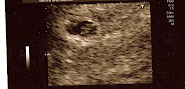
Two years ago we learned that the 'next year's model' Noisykid had died in utero at 11 weeks gestation.
This child would have been born around the time that Theodore died.
We named her Therese Mary Catherine.
Today I was reminded of this when we saw an autistic child in a restaurant, and my wife reminded me of something which our Priest said shortly after Theodore's death.
"The only thing harder than living with the Cross is not living with it."
We thank God for all of our children; those who live and for those who have died.
On a lighter note, here is the youngest, Bernard, sporting some cool shades:
Our Lady of the Mysterious Decapitation needs a fresh coat of paint:
She returns this evening....
My confessor remarked that all children are a cross to their parents, but that it was through the cross that we obtain our salvation. Food for thought at the beginning of another week.
My confessor also reminded me that there are only three reasons to do anything:
1. For the greater glory of God(AMDG, or Ad Majorem Dei Gloriam), 2. For the conversion of sinners, and 3. For the intentions of the immaculate heart of Mary.
After Mass, Father anointed a woman who was ill, and it brought back memories of him anointing Theodore. I thanked him later for all that he has done for our family; giving Theodore the anointing of the sick was just one way we were blessed.
When we got home, I read a book to one of the kids while the others played baseball on the newly mowed back yard. After reading a children's book from John Deere, I got back into Jane Austen's Pride and Prejudice. I was getting to the end, where the climactic battle between the evil empire and the cute and cuddly furry forest people starts. Suddenly the kids called me outside; I figured someone broke a leg. Instead, they showed me an aircraft carrying the space shuttle that was circling over Dallas. I pulled out my iPhone to videotape it, but realized I had not started the 'video' function. You will have to trust me that it happened. I think it might be good to skip mentioning that I saw Bigfoot and the Yeti at the controls of the aircraft.
I went back inside, only to be called out again to examine a snake. It appeared harmless, and wasn't even exciting to our sole remaining cat. I tried to get some action shots, but the snake just wanted to play dead. I threw it into the garden so it could go on with its quiet country life.
Here the cat - 'Skinny' - looks at the poor little snake. Here I am holding the snake for a close-up. It was not a lively snake. Last night we watched 'Swiss Family Robinson' and apparently the fight with snake mainly consisted of trying to get the snake to stay with the actors.
After reading a little, I took a couple of air rifles outside to shoot for a while. I made some videos of the little boys shooting, but I accidentally covered the microphone. Here is the one of me shooting an RWS Diana 300R, which is an underlever air rifle which can shoot seven pellets in rapid succession without having to reload.
I have posted it before, but I just love seeing it on a bench in the front yard at my brother's parish, St. Rita Catholic Church, in Alexandria, VA.
I was blessed with some time to spend in front of the Blessed Sacrament, then we went to dinner at an Indian restaurant with my brother and several of his fellow priests.
The next time you find yourself in Alexandria, stop by St. Rita's for some spiritual nourishment, and then visit the Bombay Curry Company for some good Indian food.
I see a lot of children with mental as well as physical handicaps in my line of work. These children - and their parents - invariably touch my heart as they remind me of Theodore and the many challenges and joys which came with having a special needs child. Theodore, who had autism and seizures, died in April, 2008 at the age of fifteen.
Recently, I have started talking more to parents about their unique role they have taking care of a special needs child. I try to encourage them, and praise them, because I recall how sweet it was to get a kind word, especially on days when Theodore was being difficult. The consolation from such comments was like receiving flowers from Heaven. Since it helped me so much when taking care of Theodore, I realized it was important to pass on the encouragement to those who still have children like Theodore.
After taking care of a child very much like Theodore this past week, I was shocked when my wife told me about this tragedy involving an autistic child. There is a Facebook page as well, for those who are interested.
I can imagine the kind of sorrow which this family is experiencing, and I know that more than anything they need our prayers during this time of sorrow. Please pray for them.
On a lighter note, here is one of the greatest consolations we have received over the past year. Join him as he eats pancakes for Sunday breakfast:
July 1, 2009 marks the 20th anniversary of our marriage. God has blessed us in so many ways over the years, and I thought a few pictures would be nice to put on the blog.
1989. Here we are saying our vows. The color is due to the natural light rather than a flash during the wedding:
1990. Our oldest son, Dominick, came along in April:
1991. The following year brought us our first daughter, Bernadette. She looks very serious in the picture:
1992 is the year we were blessed with Theodore. He slept through the shoot while I had to hold Dominick:
1993. Nathaniel arrived right before the end of 1993. I recall going to the department 'Holiday' party a few days earlier, and everyone kept grabbing Carolyn's belly. It just drove me nuts - I would never do that to someone else's wife! Note a recurrent theme in this picture: sleeping baby and squirming older brother.
1995. Augustine was born in March of that year. Dominick and Theodore were just doing their own thing when this picture was taken. Theodore had a red ball in his hand that we could not get away from him.
1996. San Antonio, Texas. Benedict was just a few months old when we moved to Texas. This was our almost last time getting our picture done at one of those 'studios.'
1997. After four boys in a row, Genevieve joined us in June. She was the first Texas Native, the first Air Force baby(at least on while we were on active duty), and our largest baby to date. The Air Force didn't believe in inducing labor, so she was born on her due date at 11#, 4 oz. No obstetrician has let Carolyn go full term since. Here Genevieve is giving a big Texas Howdy! to all the folks:
1998/1999. This picture is either really late 1998 or early 1999, because Jacinta was born in December of 1998. Also, there is no way we would be wearing jackets in the summer in San Antonio.
1999. One day after our 10th anniversary, we lost our first child when Carolyn had a miscarriage at about two months. We named our little one Anastasia Innocent. This was a painful lesson in realizing just how much our children are a gift from God, whether we have them for years on Earth or just a picture on an ultrasound.
Several months later, our parish started to put together a directory with family photographs. On summer evening we posed for this picture in a sweltering office. The photographer later disappeared with all the money he had collected, leaving just proofs behind. Some of the children were noticeably wilting in the photo:
2000/2001. January, 2001 shows that we learned our lesson, and we now take all family pictures during the cooler Texas months. No more August photo shoots. Cornelius was born in August, 2000. He was the first complete 'civilian' child we had, as I had separated from the Air Force in July, 2000.
2001. September 9, 2001, Marcellinus was born, and he came home on 9/11.
2003. In 2002, we moved to the Dallas/Fort Worth area. One of our wildest adventures in this neck of the woods was building a house. Here we are posing in front of it with our first Dallas child, Maximilian:
2005. You can barely tell we are posing around one of our tractors in this picture. Our youngest daughter, ZelieLouisa is sitting on Carolyn's lap. Note the brown grass - that is what happens when it doesn't rain for months.
2006. Note the boys are getting bigger in each picture. Our numbers have not grown, despite our prayers for more children.
2007. Once again, the joy of a new life became sadness as we lost another child at just a few weeks after conception. This year we posed by our picture of Divine Mercy, and we took consolation in the prayer which ends with the words "....Your Will, which is love and mercy itself."
2008. In the picture above, Theodore stood by the picture of Divine Mercy, with his head inclined toward it. Theodore died suddenly on April 3, 2008. In the picture below, we included his portrait as a reminder of how much he remains in our hearts.
2009. This photo montage helps explain why for years the customary greeting I would hear was, "how are you? Is Carolyn pregnant?" It appeared that those days were over, but God smiled on us again, and in January of 2009 we were blessed with another son, Bernard. He is a blessing to all of us, and here he is braving the 100+ heat in San Antonio last weekend:
Our life together has been blessed beyond our comprehension with our children and friends, and most importantly our Faith. We have tried to do the Will of God in our marriage, and in particular we have been open to life since the the beginning. Over the years, rather than wishing for this part of our lives to end, we find ourselves praying and begging God for more children. Our children are the only gifts we have on Earth that can follow us to Heaven, and we intend to see all of our children there one day.
I recall a comment from a book on marriage which has stuck with me for years. It said that choosing a good spouse would bring a bit of Heaven into the marriage. I have been blessed with my wife Carolyn. She is my best friend, and she is motivated by the desire to see her husband and all of her children get to Heaven. It helps that she loves God so much, for I can be difficult at times. I thank God for my wife, and I thank Carolyn every day for saying 'I do' to me twenty years ago.
UPDATE, DECEMBER 30, 2009!
LATEST FAMILY PHOTOGRAPH:
Front Row: Genevieve(12) holding Bernard(11 months), Marcellinus(8), Cornelius(9), and Maximilian(6)
Middle Row: Carolyn(young), ZelieLouisa(4) held by Bernadette(18), Benedict(13), Jacinta(11), Stephen(old)
Back Row: Augustine(14), Nathaniel(16 today, 12.30.2009!), Dominick(19)
UPDATE: HERE IS OUR VIDEO COMMEMORATING OUR 21ST ANNIVERSARY:
ANOTHER UPDATE: A PICTURE FROM CHRISTMAS, 2010: ...and for good measure, here is a picture of Carolyn and I from over the Summer. Carolyn is so beautiful, and I am so blessed to be her husband.
YET ANOTHER UPDATE: Here is our latest picture from January, 2013. Note that the children are getting bigger while we seem to be shrinking. Also, the photographer neatly arranged it so the Native Texans are all in the front row, while the 'Northerners' are in the back. Actually, since I was born in California I should be in a row all by myself.
Back Row, Left to Right: Nathaniel (19), Augustine (18), Carolyn, Stephen, Dominick (22), Bernadette (21), and Benedict (16)
Front Row (The Native Texans): Marcellinus (11), Genevieve (15), Maximilian (10), Bernard (4), ZelieLouisa (7), Jacinta (14), and Cornelius (12)
Thanks to Facebook, I am able to embed the video tribute which was played at Theodore's Wake. After this photo montage, we also showed the two videos of Theodore singing:
Today I heard that Jett Travolta, the son of John Travolta, died. There are stories circulating that Jett had autism, which is something our son Theodore had as well.
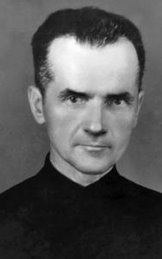
What struck me the most was how similar Theodore and Jett looked. Consider this picture at this link, and then consider the picture of Theodore on the sidebar and this video of Theodore:
It sounds as if both of our children died in the bathroom.
My heart goes out to Mr. and Mrs Travolta and their family. It especially saddens me to know that John Travolta was raised Catholic and left the Church during the 1970's. This family needs our prayers; please remember them in your prayers.
I still get bills for some of his medical care; one in particular keeps getting larger each time I receive it. Every time I call the billing company they tell me it was an error and we have a zero balance on our account.
Somewhere a tree was planted in Theodore's honor; I can't imagine that it would be able to sit still. I recall how he used to sneak up to the lectern and start talking into the microphone. He especially liked to run to the lectern as soon as i went into the confessional.
Speaking of confessionals....
I had a dream about Theodore several weeks ago early one morning. In my dream, Theodore was in church along with the rest of the family. I was standing in line for confession, and Theodore was running around greeting all the people who were present. From somewhere he pulled a tray of donuts, which he began offering to all the people. He ran into the sacristy with his donuts, laughing all the way. In my dream, I started to laugh but ended up crying.
I told my wife about my dream when I left for work, and she had a dream about Theodore afterwards. She dreamed that Theodore told her he was happy where he was.
The look on the face of Henry V after he lay the child in the cart always gets me; hardly a day goes by without me having a flashback of Theodore's death and my failed attempt to resuscitate him.
Mary my mother, take my hand today, and all days. Lead me away from all occasions of sin. Guide me in fulfilling your last words in the Gospel, "Do whatever He tells you." Amen.
I used to have a section here where I listed some of my interests, but I was saddened to see that it linked my site to folks who had, well, behavior not really in line with that of a Catholic working hard to be a good dadwithnoisykids.
We have 12 living children, and their ages are: 21, 19, 17, 16, 15, 13, 12, 10, 9, 7, 5, and 2 years old.
Our third child, Theodore, passed away on April 3, 2008, at the age of 15.