I invite you to sign The Manhattan Declaration

The Manhattan Declaration

Theodore's Memorial Video

Showing posts with label Home Schooling. Show all posts

Tuesday, December 13, 2011

Reasons to NOT Homeschool

Here is a link to an article which asked children what they thought about being homeschooled.

Yes, it's dated a bit.  But it is still worth reading.  Some of the more choice comments included such gems as:

"In my opinion, i would never turn to home schooling. When you are home schooled, you automaticly loose the whole social experience of school. In the real world you need to be social. Otherwise you’re going to get know where. I understand that the learning education might be to an advantage while homeschooling because its all one on one and you are the only student reciveing all the help you need whenever you need it. I would never home school my child because I would be holding them back from friends and the social life they will need in the feature. I would never even consider home schooling. "

"I would never want to be home schooled because you are not able to socalize with your friends at school. If you dont meet or talk to anyone, people might start to make fun of you because you have no friends that hang out with you. You might be smarter if you are home schooled but you still will not know how to make good friends if you get accepted into a college where you are met with other kids. If your are home schooled and you go to college you will fell as if the class is going too slow or if you know something before other kids then you will be frusterated that you are learning the same thing and nothing new. Overall I think that home schooling is not something that you should consider because you are not social with other kids, and later on in college you will not learn as much as you should be learning."

Ah, yes.  The social life.  A social life where every other confounded word is just another confounded word which can be confoundedly used as either a confounded adverb or a confounded adjective depending on what kind of confounded thing you are trying to say.  No confounded thanks, I say.

  Granted, home schooling is not for everyone, but ultimately the parents are responsible for assuring that their children are educated in the Faith as well as the basics of Readin' Writin' and 'Rithmetic.

Sunday, May 29, 2011

Homeschool Conference Report


We attended the IHM North Texas Conference in Arlington this past weekend. We, or at least one of us, have attended a home schooling conference just about every year since 1993. That was around the time when we decided that home schooling was what we were going to do with whatever children God sent us.

Even after so many years, we still find these conferences worth attending. First of all, it is good to get a boost of encouragement and enlightenment from some of the speakers. Sometimes a casual comment made at the podium will inspire us to renew our commitment to be better parents and educators. Usually these bits of wisdom are related to discipline issues. Our children have noticed this phenomenon as well. They told us that they dread our return from these conferences, as it usually means the loss of some of their so-called freedoms is imminent.

The conferences are also a place to learn about new trends, products, controversies, and challenges in Catholic homeschooling. Some of the speakers brought up some things which will affect all of us in the future; I shall speak about this in a moment.

In brief,

We, uh, missed the first conference given by (Mrs. Terry Arnold) because I had to run some errands on the way to the convention center. It was on making the change from school to homeschooling. It was really helpful for some people we met after that talk, as they were just at the conference to consider making the jump into homeschooling.

The second talk was by Dr. Dominic Aquila, the VP for Academic Affairs at the University of St. Thomas in Houston. This school is getting a reputation for orthodoxy here in Texas. He discussed several papal documents, in particular Familiaris Consortio and Ex Corde Ecclesiae, especially how the former spells out how the parents are responsible for the education of their children, and the latter spells out what a Catholic university has to do to be faithful to the Magesterium. The zinger of his talk was when he discussed the future of 'home school' college, and how the person who can 'synthesize' various disciplines (such as science, ethics, philosophy) together will be highly sought after in the future. His talk gave us much to think about.


Mrs. Virginia Seuffert gave the next talk - after a dinner break - on 'Reaping the Rewards of Homeschooling.' It was a good talk for those who were considering switching to home schooling as well as for those of us who have been doing it for a while. We always enjoy listening to Mrs. Seuffert. Her talk gave us hope that one day our children will be happy, holy, and productive souls.

Speaking of hope, Father Philip Wolfe gave an excellent talk about the virtue of Hope. I recommend folks listen to some of his recorded sermons at this website.

The following day - Saturday - brought with it another event in the neighboring hall. It was some sort of Pokemon video game contest. For the most part, our conference had minimal contact with that group, with one glaring exception: the bathroom. Needless to say, the restroom which was spotless on Friday night looked as if a herd of incontinent animals had run through it on Saturday. Also, there was a large inflatable thing suspended from the ceiling in the room. One might say they had elevated their inflatable god to worship:


First up was Mrs. Seuffert, who spoke about managing housework and schoolwork. Once again, a good talk, but in the middle of it I turned to Carolyn and said, "She can't be serious." At that moment, Mrs. Seuffert was explaining to the audience how easy it was to make homemade spaghetti sauce. Carolyn whispered back that a lot of parents don't know the basics of cooking, and so this was worth including in this lecture. All I could think is I don't know how good I have it, and I was thankful that our children all have or are learning to cook. One day, Carolyn will teach me, too.

Dr. Ray Guarendi gave two lectures; the first was on maintaining a sense of humor in the family and dispelling some of the myths of experts and the media regarding parenting. The second was on discipline. We always enjoy Dr. Ray's talks because they combine humor and lots of good, sound advice.

The second to last talk was by Mrs. Terry Arnold, who gave a lot of practical advice for the new and old homeschoolers alike.

The final speaker was Fr. Joseph Fessio, who spoke on the new translation of the Missal which is coming this Advent. He discussed how the new translation will be more faithful to the original Latin prayers of the Mass. One great benefit of this change is that the original Latin prayers are far more beautiful than the translations which originated in the late 1960's and early 1970's. We experience this whenever we attend Fr. Paul Weinberger's Novus Ordo Latin Mass at St. William the Confessor Catholic Church in Greenville, Texas. In the weekly flyer, Fr. Paul will print out several of the prayers of the Mass, such as the Collect, so that one can compare the current prayer with the Latin translation. The Latin is always more beautiful, sounding like the words one would use to address God. Fr. Fessio pointed out that the new translations will also be more theologically sound than the 1970's translations.

This was an excellent conference. We learned from all the speakers, and all the speakers were interesting and inspiring. Well done, IHM!

In conclusion,

Love after 21+ years.

I took Carolyn to dinner that night after the conference; we got a seat in an Italian restaurant. We were located near the center of the restaurant, along one of the busiest aisles right between the bar and the kitchen. That was okay with us; we were too busy talking and looking into each other's eyes.

I did notice a young couple at the next table over. They were also looking deep into each other's eyes and holding hands and kissing. Meanwhile, at our table, we were engaged in a lively discussion of the family budget. I was trying to explain how, with absolutely no knowledge of accounting, money was going to be available to pay certain bills.

It occurred to me that twenty plus years ago we would have been holding hands and kissing in public like that younger couple. That doesn't mean that the love is gone from our marriage; rather, it just means that we don't choose to display our affection as publicly as we used to. In fact, our love has grown deeper and stronger through the years, and in less than a month we shall celebrate our 22nd anniversary - the most wonderful years of my life.

Besides, any time we do kiss in public we hear from our children about how gross and disgusting it is.


Wednesday, May 25, 2011

St. Albert and the Worm Dissection

WARNING: GRAPHIC IMAGES OF WORM INNARDS FOLLOW.

YOU HAVE BEEN WARNED!


Yesterday, we dissected worms as part of our St. Albert Science Class.

After starting with prayer, we sat down and discussed the various functions which animals have to carry out in order to live and thrive in this world. In brief, we talked about how most animals have to:

Breathe
Eat
Move about
Make baby animals

Along with this short and incomplete list, I added:

Circulation
Excretion or elimination of waste products
A nervous system to control all of these functions

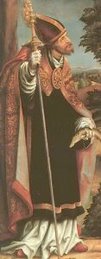
All of these functions can be seen rather easily in the lowly earthworm, Lumbricus terrestris. Here is a picture of an earthworm in happier times:

This discussion superficially covered these functions mentioned above. The children were not as interested in 'functions of an animal' as they were keen on asking other questions, such as:

Is the worm still alive?
Could it come alive if we put it into the ground?
Do scientists and doctors dissect people?

Cadaver dissections is something I can talk about, and that started a HUGE side discussion. I told them a little about what it was like to dissect a human body in medical school. I explained where the bodies came from, how they were donated by people before death, and this was a tremendous gift they had done for the field of medicine. I mentioned that my cadaver in anatomy lab was a man with a tattoo of the name 'Ann' on one of his arms. I also mentioned that I pray for the repose of that man's soul whenever I think of him.

They wanted to know what it smelled like. I forgot to tell them that we wore clothes designated for anatomy lab and nothing else so they could be thrown out at the end of the semester. As I write this, I recall how it took a while to get the odor of formaldehyde out of my system after lab. Thankfully, our worms came in a different type of preservative which smelled bad, but not as awful as formaldehyde.

As an aside, I skipped over the fact that earthworms are hermaphrodites, where they have both male and female parts for making little worms. For the sake of this class, we considered this worm to contain 'reproductive organs' for producing eggs. Our children can learn the details of reproduction later.

Originally we were going to do the dissection out in the open air, but the wind was too strong, so we did it in the school room.

We prepared for the class by getting some thick cardboard to use as the dissection boards. We got out a container of surgical instruments and dissecting implements we had set aside for classes like this. Our older children had used them in the local home school co-op; Nathaniel assisted me and his siblings by showing them how to dissect the worm. I reminded them that scalpels and knives are used very little in dissection. This is why we could use one scalpel to dissect five worms; this made the class safer than if every child were waving around a #15 blade.

I had obtained the used surgical instruments not by theft but by getting broken instruments from the sterile supply department of one of the hospitals I worked at in San Antonio. At that time (1998), we were dissecting frogs, and I wanted some tools for the job. The head of sterile supply, once he realized why I wanted the instruments, let me look through a barrel full of hemostats, forceps, scissors, needle drivers and probes which were too damaged to be repaired or reused for surgery. They still could be used for frog dissection, though. We held onto those instruments for other dissection classes. The only thing I bought recently for dissection were some disposable scalpel blades.

We used non-sterile gloves bought at Costco. Max brought along his own device to limit the smell:


After pinning the worm to the cardboard and identifying external markings on it, we all made a small incision on the dorsum, or back, of the worm, and then used scissors to open it up for inspection. Here is where the pins really came into play:

Looks kinda gross, eh? The anterior, or front, part of the worm is where all the business takes place. After the first two or three inches, the body of the worm consists of repeating segments which only contain the digestive, excretory, nervous, and respiratory system. Muscles in the wall of the body help move it. For this reason, we did not fillet the whole worm.

The internal anatomy shows what the highest priorities are for a worm. The major system is the digestive system, which is the dark tube running the length of the body. At the front of the worm, the digestive system consists of a mouth, pharynx, esophagus, crop, and gizzard. I explained how the worm, like the chicken, has no teeth, and must find another way to grind up food. This led to a side discussion of the Thanksgiving turkey, and all the little bits of turkey which come in a little bag inside of it. I reminded them of the gizzard which the turkey uses to grind up seeds and grain, and how this is similar to the one the worm uses.

Some of the children looked uneasy. Perhaps we won't be having turkey this Fall....

The next biggest organ system are those for making little worms. In comparison, the brain is barely recognizable. It shows that worms spend very little time writing sonnets to their loved one or blogging about books they have read. Most of the white things in the picture below are for reproduction.


After cleaning up, we reviewed some of the functions of an animal, and how they are accomplished by the lowly earthworm. I also talked about how important worms are to our soil. Recently, I tilled the garden, and I only saw one worm in the soil. In the future we may be raising worms to help our North Texas soil grow more than just grass.

I don't think any of the children walked away from this wanting to go to medical school, but there is still time....

St. Albert, pray for us!


Thursday, March 03, 2011

The Return of St. Albert the Great


Back in 1998 I put together a science class for some of the homeschooling boys. I called it the St. Albert the Great Science Club, under the patronage of St. Albert, patron saint of scientists. I would have a class every month, on a Saturday, and I only did it that year. It was a big success, and Carolyn had been after me for a while to start it up with a younger generation of our children.

I said I would work on it. I looked over some notes, and thought about it. Someday I would get around to starting it.

That someday was today. I was off work early, and Carolyn told the kids and I that we could hold our first class that day. I gulped real hard and said I would be ready. Then I headed off to the store to get the materials, the missing ingredient, for our first experiment. When I got back from the store, some Mexican hot chocolate was waiting for me - a gift from some friends of ours in San Antonio. Like most Mexican treats, it was heavy on the sugar. After one cup of lactose-free Abuelita cocoa, I was ready to take on the world.


Briefly I discussed the reason for the class, starting with a definition of science, and then discussing the reasons for the study of science. I discovered a great reference for this subject; namely, the 'why study science' in the context of our Catholic Faith. I found this in a book called For the Beauty of the Earth, by Klassen et. al. and published by St. Paul's Publishing Company (1983). I was surprised to see it dedicated to John Senior, Dennis Quinn, and Frank Nelick; these were the founders of the Integrated Humanities Program at the University of Kansas in the early 1970's. This program resulted in a lot of students converting to the Faith; some of them felt a calling to the consecrated life. A few of those called to the religious life joined the Benedictine monastery at Fontgombault in France, and then returned to the United States to establish the Benedictine Monastery at Clear Creek. It is amazing to see the fruits of the work of these three men almost forty years after.

I am still working my way slowly through John Senior's book, The Death of Christian Culture.

Here is the list for why we study science, broken down into what are considered the 'ends,' or reasons for studying science. I found these listed in some other Catholic science books - in more child friendly terms - but I like this list for my own benefit:

After discussing the 'why,' we discussed the scientific method, and the various parts of it. It was a lively discussion, with my students ranging in age from 5 to 14 years old. Briefly, the scientific method consists of 1. asking a question, 2. forming an explanation, or hypothesis, 3. construct a test, or experiment, to prove your explanation, 4. perform the experiment, recording the results, and 5. draw some conclusion based on the results.

We did the first experiment I did back in 1998: the popcorn test. The question was to determine if increasing the water content of popcorn would make it pop better, with fewer 'old maids' left in the bottom of the bowl. Here is what it looked like on the chalk board:


We had three batches of popcorn: popcorn warmed in the oven, popcorn soaked in water, and a 'control' group of popcorn which was left alone. I originally planned for the soaking/drying time to be only 30 minutes, but our discussion went a bit longer than that.


You can imagine what happened. Carolyn wisely had us pop the 'control' group first, and that showed us how long to pop the other batches.

The 'dry' popcorn came out of the oven looking like this:


This is what it looked like after 45 seconds on the stove top. The video does not include the mad dash to get the burning popcorn out of the house:


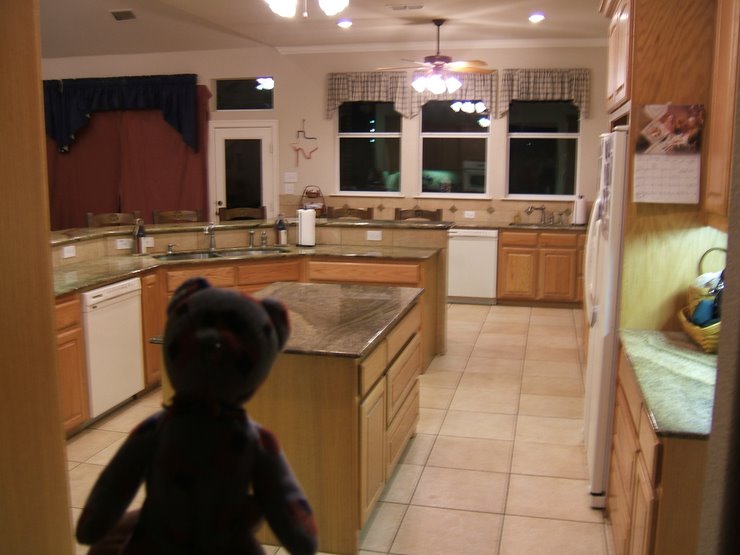
The soaked popcorn did not fare much better. In the picture below, our students are standing behind the different batches of popcorn. The 'control' group is on the left, the 'soaked' group in the middle, and the charcoal or 'dry' group is on the right.


After the experiment was over, and the air had cleared in the kitchen, we sat around and came to some conclusions. I think the children did very well, but the best conclusion has to be the third one listed on the chalkboard below:

Butter and salt.

Our Lady of the Mysterious Decapitation

Our Lady of the Mysterious Decapitation
Now restored with the help of some cement!

Prayer to Our Lady of the Mysterious Decapitation

Mary my mother, take my hand today, and all days.
Lead me away from all occasions of sin.
Guide me in fulfilling your last words in the Gospel,
"Do whatever He tells you."
Amen.

I am An Amateur Catholic Blogger!

Amateur Catholic B-Team Member