I invite you to sign The Manhattan Declaration

The Manhattan Declaration

Theodore's Memorial Video

Showing posts with label Medical. Show all posts

Monday, February 06, 2012

Feast of the Martyrs of Nagasaki, Japan in 1597

February 6th is the Feast of the Martyrs of Nagasaki.  In 1597, St. Paul Miki and Companions were crucified on a hill overlooking Nagasaki.

Shorty before the United States entered the Second World War, a Japanese man took Paul - from St. Paul MIki - as his baptismal name.  Paul Takashi Nagai was a physician in Nagasaki, and he survived the atomic bomb which was dropped on it on August 9, 1945.  He pointed out, in a speech given for the funeral for the 8,000 Catholics who died in Nagasaki, how the Cathedral had been offered up as a sacrifice for an end to the war:

On August 9, 1945, at 10:30 A.M. a meeting of the Supreme Council of War was held at the Imperial Headquarters to decide whether Japan should capitulate or continue to wage war. At that moment the world was at a crossroads. A decision was being made that would either bring about a new and lasting peace or throw the human family into further cruel bloodshed and carnage.    
And just at that same time, at two minutes past eleven in the morning, an atomic bomb exploded over our district of Urakami in Nagasaki. In an instant, eight thousand Christians were called into the hands of God, while in a few hours the fierce flames reduced to ashes this sacred territory of the East. At midnight of that same night the cathedral suddenly burst into flames and was burned to the ground. And exactly at that time in the Imperial Palace, His Majesty the Emperor made known his sacred decision to bring the war to an end.

On August 15, the Imperial Rescript which put an end to the fighting was formally promulgated, and the whole world welcomed a day of peace. This day was also the great feast of the Assumption of the Virgin Mary. It is significant to reflect that Urakami Cathedral was dedicated to her. And we must ask if this convergence of events—the ending of the war and the celebration of her feast—was merely coincidental or if there was here some mysterious providence of God.

I have heard that the second atomic bomb, calculated to deal a deadly blow to the war potential of Japan, was originally destined for another city. But since the sky over that city was covered with clouds, the American pilots found it impossible to aim at their target. Consequently, they suddenly changed their plans and decided to drop the bomb on Nagasaki, the secondary target. However, yet another hitch occurred. As the bomb fell, cloud and wind carried it slightly north of the munitions factories over which it was supposed to explode and it exploded above the cathedral.
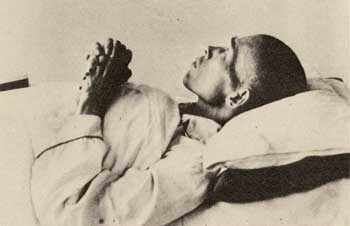
  Dr. Nagai praying
 
Dr. Nagai praying
This is what I have heard. If it is true, the American pilots did not aim at Urakami. It was the providence of God that carried the bomb to that destination.

Is there not a profound relationship between the destruction of Nagasaki and the end of the war? 

Nagasaki, the only holy place in all Japan—was it not chosen as a victim, a pure lamb, to be slaughtered and burned on the altar of sacrifice to expiate the sins committed by humanity in the Second World War?

The human family has inherited the sin of Adam who ate the fruit of the forbidden tree; we have inherited the sin of Cain who killed his younger brother; we have forgotten that we are children of God; we have believed in idols; we have disobeyed the law of love. Joyfully we have hated one another; joyfully we have killed one another. And now at last we have brought this great and evil war to an end. But in order to restore peace to the world it was not sufficient to repent. We had to obtain God’s pardon through the offering of a great sacrifice.

Before this moment there were many opportunities to end the war. Not a few cities were totally destroyed. But these were not suitable sacrifices; nor did God accept them. Only when Nagasaki was destroyed did God accept the sacrifice. Hearing the cry of the human family, He inspired the emperor to issue the sacred decree by which the war was brought to an end.

Our church of Nagasaki kept the faith during four hundred years of persecution when religion was proscribed and the blood of martyrs flowed freely. During the war this same church never ceased to pray day and night for a lasting peace. Was it not, then, the one unblemished lamb that had to be offered on the altar of God? Thanks to the sacrifice of this lamb many millions who would otherwise have fallen victim to the ravages of war have been saved.

How noble, how splendid was that holocaust of August 9, when flames soared up from the cathedral, dispelling the darkness of war and bringing the light of peace! In the very depth of our grief we reverently saw here something beautiful, something pure, something sublime. Eight thousand people, together with their priests, burning with pure smoke, entered into eternal life. All without exception were good people whom we deeply mourn.

How happy are those people who left this world without knowing the defeat of their country! How happy are the pure lambs who rest in the bosom of God! Compared with them how miserable is the fate of us who have survived! Japan is conquered. Urakami is totally destroyed. A waste of ash and rubble lies before our eyes. We have no houses, no food, no clothes. Our fields are devastated. Only a remnant has survived. In the midst of the ruins we stand in groups of two or three looking blankly at the sky.

Why did we not die with them on that day, at that time, in this house of God? Why must we alone continue this miserable existence?

It is because we are sinners. Ah! Now indeed we are forced to see the enormity of our sins! It is because I have not made expiation for my sins that I am left behind. Those are left who were so deeply rooted in sin that they were not worthy to be offered to God.

We Japanese, a vanquished people, must now walk along a path that is full of pain and suffering. The reparations imposed by the Potsdam Declaration are a heavy burden. But this painful path along which we walk carrying our burden, is it not also the path of hope, which gives to us sinners an opportunity to expiate our sins?

“Blessed are those that mourn for they shall be comforted.” We must walk this way of expiation faithfully and sincerely. And as we walk in hunger and thirst, ridiculed, penalized, scourged, pouring with sweat and covered with blood, let us remember how Jesus Christ carried His cross to the hill of Calvary. He will give us courage

“The Lord has given: the Lord has taken away. Blessed be the name of the Lord!”

Let us give thanks that Nagasaki was chosen for the sacrifice. Let us give thanks that through this sacrifice peace was given to the world and freedom of religion to Japan.

May the souls of the faithful departed, through the mercy of God, rest in peace. Amen.

(From The Bells of Nagasaki by Takashi Nagai, Kodansha International, 1984, pp.106-110)

Dr. Nagai's wife Maria died in that explosion as well.  Shortly after the war ended, he was diagnosed with leukemia.  Here he is with two of his children:


D

Thursday, November 10, 2011

Veteran's Day, 2011

It has been eleven years since I separated from the Air Force, and 24 years since I was commissioned as a 2nd Lieutenant in the United States Air Force.  The years have erased a lot of the feelings which I had while on active duty, especially the chafing awareness that I had given up my freedom while serving our country.  Instead, most of the thoughts I have now are how blessed I was to serve in the military.

Here below is a picture from the Summer of 1988, when I got to take an 'incentive flight' in a jet trainer.  More on incentive flights in a moment.  Looking at this picture brings all the memories of that day back to me.  I was scared, especially after being 'briefed' on how to operate the parachute strapped to my back if it did not automatically deploy.  We also were shown how to use the heavy knife to break through the canopy in the event that became necessary.  Then there is that little thing called acraphobia which I have.   I went anyway, and had a wonderful time actually controlling this airplane under the watchful eye of a flying instructor's instructor.

On the flight out of San Antonio, I wished I still had that parachute.

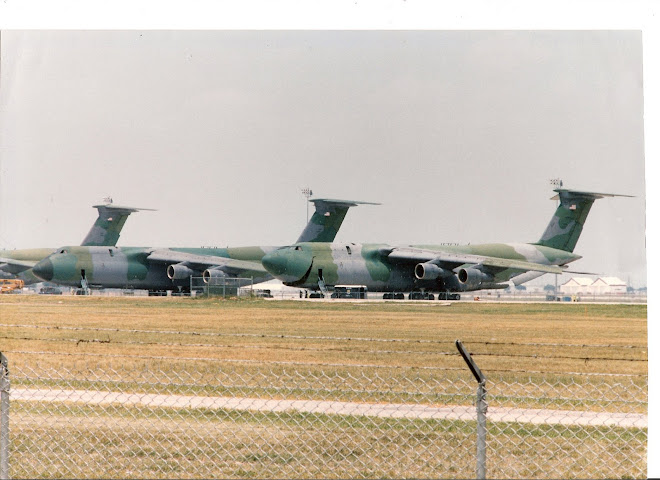
Incentive flights were intended to attract physicians into Aerospace Medicine, which is a lot of primary care medicine combined with occupational medicine.  The flying sounded like fun, and I was really excited to go on this little jaunt above San Antonio, but I couldn't get enthusiastic about doing family practice.  My thoughts turned out to be fairly accurate, as I found out years later how Flight Surgeons would qualify for their flight pay if they were stationed at one of the bases in San Antonio: they would spend their required flying hours in the passenger seats of a C-5 as their pilots practiced a maneuver called a 'touch and go.'  For those of you who don't know, touch and go is where the pilot comes in for a landing, briefly allowing the wheels to 'touch' the runway before roaring back into the air.  That doesn't sound toooo bad, until you realize that the passenger seats in the C-5 are located behind the cockpit - on the top level, above the cargo bay - and they don't usually have all the creature comforts of commercial airliners.  No air conditioned vent blowing on you from above, and no windows.  Oh, and one more thing: usually the seats are all positioned so the passengers all face backward.  So just imagine how comfortable it must be, flying in the low altitude hot air above San Antonio, while facing backwards in sweltering heat and lots of turbulence.

That is why this aircraft was smiling when I took its picture - also in 1988:

I took this picture while standing on the roof of a car we rented from a place in San Antonio called Chuck's Rent-A-Clunker.  I was trying to eliminate all the barbed wire from the photograph.


I was in the Air Force for 13 years: nine years in the Inactive Reserves and four years active duty.  I spent two weeks in El Salvador, anesthetizing children and adults for eye surgery as part of a humanitarian mission.  I was never issued a weapon, although I had to qualify with a 9mm pistol as part of my training for mobilization.  During my last year on active duty, I could not be farther than 50 miles from the base in the event I was deployed at a moment's notice.

A week after I separated from the Air Force, I had a medal delivered to my home.  It was a commemoration for my service to our country.  It got me thinking at the time, that all I ever did was wake up every day and go to work, caring for active duty personnel, retirees, dependents - especially the children - and any trauma victim who landed in our emergency room.  For that, just doing my job, I got a medal.

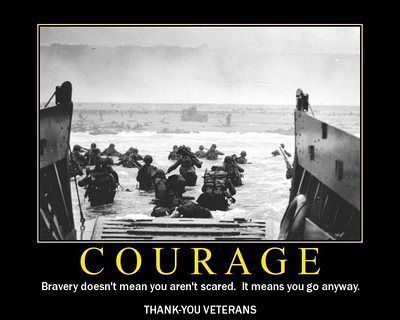
For some veterans, just doing their job meant a lot more than selecting what uniform to wear today and then battling the early morning traffic to get to the base.  For most, just doing their job meant putting their lives on the line for the good of all of us back home.


Please pray for those who never came back, or for those who came back scarred, damaged, forgotten.  I have heard their cries in military and veteran's hospitals.

Eternal rest grant unto them, oh Lord, and may perpetual light shine upon them.  May their souls, and all the souls of the Faithful Departed, rest in peace.

Friday, October 15, 2010

Our New Health Care System, Simplified


I can tell you that we are in deeeeeep trouble. As a veteran of the Air Force, I have seen the best the government can do for health care. I have also seen bad health care - courtesy of our government.

Please note that this form does not include any of the exceptions which the government has already allowed.

You are HERE.

Saturday, May 29, 2010

Book Review: ATLS Advanced Trauma Life Support for Doctors


ATLS, Advanced Trauma Life Support for Doctors is an excellent resource for physicians who treat trauma patients. The book is written very well, with a list of objectives for each chapter listed at the front. The chapters are also arranged in the same order as the recommended management of the trauma patient; for example, the first chapter deals with the initial trauma patient assessment and management (the ABC'S of trauma). Subsequent chapters address airway/ventilatory management, shock, and then trauma management of various organ systems or regions of the body. As always there are excellent chapters addressing pediatric and geriatric trauma, burns, and trauma in the pregnant woman.

The book also includes several appendices dealing with such sundry items as injury prevention, the biomechanics of injury, and trauma scores. There are also sections of the appendix which deal with disaster management, emergency preparedness and trauma care in austere environments. I do not recall these articles being present in the ATLS course I took during my fellowship back in 1995. This reflects the changes which have happened over the past fifteen years in the world - 9/11, the war in Afghanistan and Iraq, and the continued threat of terrorist attacks which is a new experience for this country. I remarked to the instructors that the lessons learned in combat are evident in the course materials.

ATLS started in the 1970's after a surgeon saw how poorly members of his own family were treated at a small hospital after an aircraft accident. Since then, over one million physicians all over the world have taken the course. My reason for taking it in 1995 was to manage trauma patients while moonlighting as a flight physician - the doctor in the back o f the helicopter. Oftentimes we would fly to the scene of an accident and have to deal with whatever we found on the ground. Having ATLS gave me a systematic way to evaluate and treat a patient in some of the worse conditions I have ever been. Those days are over for me; now I stay at the hospital and deal with the occasional trauma patient. But it is still beneficial for an anesthesiologist to be on the same page as his surgical and emergency room colleagues when it comes to dealing with trauma. I strongly recommend this course to all of my colleagues.

The book includes a DVD which demonstrates some of the techniques for minor surgical procedures and airway management. One of the videos show the WRONG way to evaluate and treat the trauma patient. My wife and I found this very amusing. The course itself did not have the dog lab I recall taking; a trauma simulator has been developed which has replaced vivisection.

Sunday, March 21, 2010

DFW Street Scenes

New this Lent. Purple Sno-balls from Hostess. Unfortunately, I could not find any of the 'rose' ones which were sold only on Laetere Sunday - that's last week for those of you who don't know.

They taste the same as the white, orange, and green ones:
Here is a sweet little boy with bacterial conjunctivitis shopping while his prescription is filled. He demonstrated 'purulent discharge' from his nose all over Dad's shirt while at the pediatrician on Saturday morning.

If Obamacare takes effect, I foresee no more Saturday hours....

A fifteen year old shows off his size 15 boots. Smooth ostrich. I hear once you wear ostrich, you will never want any other kind.

I am sticking with cowhide for now.

A typical scene in a dining room at a restaurant in Fort Worth. Riscky's makes a good hamburger. I recommend it for those visiting the Fort Worth Stockyards.

Hey! Someone with more vanity than me:

Friday, February 19, 2010

Re-Boarded


When I initially became a Diplomate of the American Board of Anesthesiology back in 1996, I was 'Certified Indefinitely,' meaning that I did not need to repeat the process for certification in anesthesiology ever again.

In 2000, the status of indefinite certification was eliminated, and all anesthesiologists have had to re-test for board certification every 10 years.

For many reasons, I decided to take the re-certification exam in December. It was less stressful than the original process: a day-long exam followed a year later with an oral exam in front of some of the brightest minds in the field. I recall one of my stem questions was on an obstetrical patient, and the other was on an elderly patient with laryngeal cancer - typical patients for a pediatric anesthesiologist. Instead the re-certification exam was computer-based and took less than four hours.

Thanks be to God, I passed. While I am still certified indefinitely, I now can demonstrate that 15 years after finishing my training I still have enough knowledge of the basics to continue in my profession.

Of course, I prefer to limit my patients to those a lot lighter, younger, and healthier than me.

Our Lady of the Mysterious Decapitation

Our Lady of the Mysterious Decapitation
Now restored with the help of some cement!

Prayer to Our Lady of the Mysterious Decapitation

Mary my mother, take my hand today, and all days.
Lead me away from all occasions of sin.
Guide me in fulfilling your last words in the Gospel,
"Do whatever He tells you."
Amen.

I am An Amateur Catholic Blogger!

Amateur Catholic B-Team Member