Friend --
Not everyone knows how to prepare for a dinner like this. As someone who's eaten countless meals with my husband, I want to tell you the one thing to do if you're selected to join him...
Just relax. Barack wants this dinner to be fun, and he really loves getting to know supporters like you.
I hope you'll take him up on it before Friday's deadline.
Will you donate just $3 today and be entered to have dinner with Barack?
These dinners mean a lot to Barack. They're a chance for him to talk with a few of the people who are driving the campaign -- and a chance for him to say thank you.
So come prepared to tell your story, and say whatever's on your mind.
Don't miss the opportunity to be there. Donate $3 or more today, before the September 30th deadline:
https://donate.barackobama.com/Dinner
Thanks,
Michelle

Wednesday, September 28, 2011
A Personal(?) Message from the First Lady


Sunday, September 18, 2011
Lego and Hello Kitty: Part of a Conspiracy

These are Lego brand 'Hello Kitty' toys which Zelie got for her birthday.
Until her birthday, I did not appreciate just how many things are made with 'Hello Kitty' branded on them.
Even this new addition to the Dallas skyline will surely have that little cat on it somewhere......

Friday, September 16, 2011
Modesty @ Mass
Have you ever noticed how well some of our Separated Brethren dress when they attend their Sunday services?
It is time we Catholics follow suit. Check this out:
Hat tip to The Tucker Bunch at 'Just Another Day in Paradise.'
It is time we Catholics follow suit. Check this out:
Hat tip to The Tucker Bunch at 'Just Another Day in Paradise.'
Sunday, September 11, 2011
Fountain Pen Review: Eine Deutsche Füller

Tonight we consider a German fountain pen, or in German, Füller, made by the Pelikan company. It is a neat little pen I bought at the Fountain Pen Hospital in New York. It is called a 'Demostrator' because one can see the inner workings of the pen from the outside.

Behold, the gold-plated fine point nib. That is my favorite type of nib for a fountain pen.

It is hard to see the innards
of this pen when I use this primitive iPhone camera, so I stood it up so one can see the ink in the chamber. The tail end of the pen spins to pull ink into the chamber.

One of my favorite parts of this pen is the cap, complete with the 'Pelikan' logo. I like it because the pelican is a symbol for Christ. In folklore, the pelican will take flesh from her own breast to feed her young. In like manner, Christ gave up His life for our salvation.
It is good to have little reminders of how much God loves us - even those on the end of a German pen.

Like all fountain pens, it rarely makes a good enough impression for duplicates like doctor order sheets or anesthetic records, so I carry around a ball point pen as well. It adds to the 'Geek' image I strive to achieve.
Wednesday, September 07, 2011
Book Review: Stanley Seagull, by Cathy Mazur

Disclaimer: I received a free copy of this book as a PDF file from the publisher, and I am receiving no compensation for writing this review. I thoroughly enjoyed reviewing this book.
Stanley Seagull
by Cathy Mazur
illustrated by Colleen Gedrich
Tribute Books
2011
Kurt Vonnegut allegedly said that any story can be simplified to the point that it is just another version of Shakespeare’s Hamlet. It might take a while to figure it out, but all the basic elements can be rooted out of any composition consisting of complete sentences organized into reasonably-sized paragraphs: dysfunctional family, character flaws, failed relationships, death, and ghosts. Consider the movie Top Gun as a good example of this concept. I disagree with the late Mr. Vonnegut, because he has overgeneralized when he said all stories are rewrites of Hamlet. The book I review today is not a variation on the theme of Hamlet, but is more than just a children's story. Stanley Seagull, written by Cathy Mazur and illustrated by Colleen Gedrich, is a delightful children’s book which my children enjoyed having read out loud to them. It does have an underlying theme which may not be obvious to the younger reader, but may interest the adult elocutionist.
In brief, Stanley is a seagull who lives somewhere along the northeast coast of the United States. I thought it was along the coast of New York or New Jersey, probably because Stanley hangs out on the boardwalk. Perhaps it is because I have fond childhood memories of visiting the Boardwalk in Atlantic City in the early 1970's. Stanley thinks only of food: where to get it, where to get more, how to get more. Even his relationships with other birds are dominated by the thought of eating and how to satisfy this one single desire. He obviously is an immature bird, as he has not been invited to feed at the choicest feeding grounds. When he does get invited there, he discovers that it is a dump, a landfill along the shore. He is warned to be careful and be ready to flee at a moment’s notice, but he forgets all caution as he gorges on the many delights spread before him. He ends up trapped in a garbage truck, which takes him far from the ocean. He ends up at a city dump, which looks a lot like the landfill he just left: there is plenty of food and seagulls, but it is colder, and there is no ocean. He misses the ocean.
He meets the other birds; one, named Walter, advises him to stay as the journey back to the ocean is too far. He tries to escape anyway. After flying for a while, he spots what he thinks is the ocean but is actually just the wet pavement of a parking lot. He returns to the garbage dump, dejected. Walter advises Stanley that the only way to return to the ocean is to make the return trip in one of the garbage trucks. It is difficult to sneak aboard, but Stanley accomplishes this. He completes the trip back to the ocean and is reunited with his friends, his cousin Seymor, and his beloved ocean.
For my younger children who sat with me while I read it aloud, this was a pleasant little book which kept them interested for a while. They liked the story as well as the illustrations which went along with it. As I looked over the book, I did start to notice a few themes which struck me, and I shall elaborate on each one briefly. Stanley is more than just a seagull when seen through the eye of metaphor and symbolism.
To begin with, I saw Stanley as a Christ figure. Consider that he enters a cave in which he falls into a deep sleep; this is reminiscent of Christ lying in the tomb after His death on the cross. He goes to a place which may be considered Hell, or Purgatory. The occupants he meets are physically taken care of, but they are separated from what is their true nature; namely, to be living near the sea. Stanley breaks out of this other place, once again having to enter the cave and falling into a deep sleep. He returns to his former, preferred life; he is resurrected from the dead, so to speak. What does not go along with Stanley as a Christ figure is that he does not come back to improve the life of the seagulls in either location; in fact, one would think that those birds representing the Just would be liberated from the city dump along with Stanley. Another problem is that Stanley receives more help than he gives to those in what one might consider Hell or Purgatory.
Two other characters in literature fit Stanley even better: Jonah and Pinocchio. All three characters end up in the hold of a vessel of sorts; for Jonah and Pinocchio, it is the belly of a large fish. For Stanley, his symbolic whale is the hold of a garbage truck. All three end up in this type of prison because of their fallen nature: Jonah disobeys God, Pinocchio is constantly getting into trouble, and Stanley fails to avoid danger while he is busy gorging himself. Finally, all three are chastised and learn, grow from the experience.
However, I think the literary figure Stanley resembles the most is actually Dante Alighieri in Purgatorio. In the Divine Comedy, Dante visits Purgatory and sees how the occupants are forced to perform penances which are related to their particular sin (or sins). In Stanley’s Purgatory, he realizes that his love for food has subordinated his love for self-preservation, and that this is how he ended up in the city dump. He must conquer his overwhelming love for food before he can be free again. He has to return to the garbage truck - his own cave - without enjoying any of the delights which are found within in order to find salvation. Helping Stanley discern his plight - and the solution – is Walter, a bespectacled and feathered rendition of Virgil, who is Dante’s guide through Purgatory. Without his explanation, Stanley would have pined away at the city dump for the rest of his life.
Another theme which is briefly explored is the concept of the protagonist coming of age in the story. Stanley is obviously an immature and inexperienced bird awaiting the opportunity to develop into an adult bird. The scene where Stanley watches Seymor steal a hot dog, and when Stanley is finally invited to feast at the landfill along the shoreline are metaphors for the child on the verge of manhood. Unfortunately, the story does not follow through with this theme after Stanley comes back from the city dump.
In conclusion, Stanley Seagull is a good read for adults as well as children. Whether the author intended to create a metaphor for Dante’s Purgatorio is debatable. What is not debatable is the comment my ten-year old son made about it. He liked the book simply because Stanley found his way back home.
Home.
Back home.
Perhaps it is really a rewrite of The Odyssey?
Stephen M. Donahue
September 7, 2011

My favorite picture from the book: Stanley flying over his beloved ocean. Illustrated by Colleen Gedrich.
More about this book:
Stanley Seagull web site:
http://www.stanleyseagull.com/
Tribute Books website:
http://www.tribute-books.com/
Book Summary:
Meet a young seagull named Stanley. Follow him as he wanders far from home and tries to find his way back. Join Stanley on his journey as he learns how humans affect the balance of nature.
Cathy Mazur's Bio:
Born in Scranton, Pa., Cathy Mazur is the daughter of Gary and Catherine H. Errico. She was educated in the Dunmore public school system and graduated from Dunmore High School in 1971. She received a bachelor’s degree in Library Science from Mansfield State College in 1975. She received a Reading Specialist Certificate from the University of Scranton in 1978. Cathy was employed as an elementary school librarian for the Mid Valley School District from 1975 until her retirement in 2010. While at Mid Valley, she instituted and coordinated the RIF (Reading Is Fundamental) program for 33 years helping students to develop a love of reading outside the classroom. Cathy served on the Board of Directors for the Valley Community Library in Peckville, Pa. for over 20 years acting as president for one year and board secretary for 19 years. She presently serves on the library’s Developmental Committee chairing various fundraising events. She resides in Dickson City, Pa. with Frank, her husband of 31 years. They are the parents of two children, Gary, 27 and Gia, 19. Now in her retirement, she is focused on writing books for children like Stanley Seagull.
Colleen Gedrich's Bio:
Colleen Gedrich, a lifelong resident Throop, Pa., earned a BFA in illustration from Marywood University in 2002. She is a freelance illustrator specializing in animal-themed work. She enjoys creating her art using mostly watercolor and pastel. As a dedicated animal rights activist and full-time program coordinator for International Society for Animal Rights (ISAR), Colleen lives her dream of joining her passions for animals and art to promote a more harmonious world with a touch of beauty. Recent works produced by Colleen include t-shirt and invitation designs, children’s book illustrations (A Different Kind of Hero), and book covers (With God There Is Hope). Colleen has also teamed up with her very talented artist mother, Kathy Holmes Gedrich, and paints murals for children’s nurseries.
Hardcover
Price: $16.95
ISBN: 9780983741817
Pages: 32
Release: July 2011
Paperback
Price: $7.95
ISBN: 9780983741800
Pages: 32
Release: July 2011
Monday, September 05, 2011
Riding Shotgun VIII?
Something is fishy with blogger today. Every time I click on the blog, I am redirected almost immediately to a page for something called 'blogrolling.' It is so confounding that I can't even determine which episode of Riding Shotgun this should be. For now, it is Riding Shotgun until proven otherwise.
This week we remember two men who died during the previous decade.
The first person is my grandfather, Francis M. Donahue, Sr. He died shortly after 9/11, which was also shortly after the birth of our son Marcellinus. At first we did not see how any of us could go to the funeral in Florida until Carolyn came up with the idea of me going with just the newborn baby.
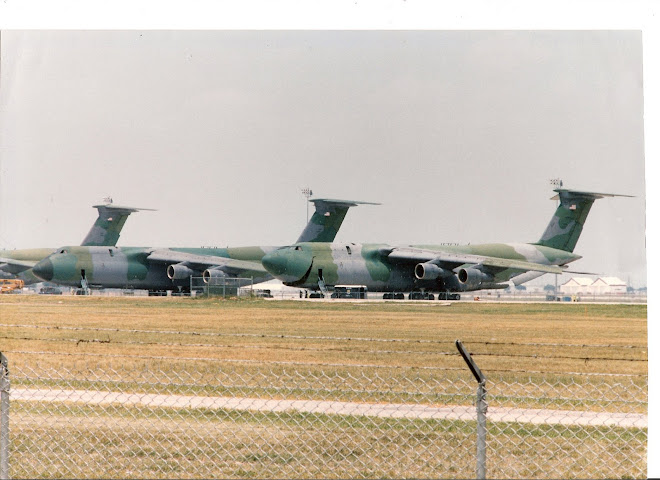
That is what I did. This was before all the complex security measures started by the TSA. Instead there were uniformed soldiers hanging about in the airport lobby with M-16's over their shoulders. It was still rather easy to get onto an airplane, even with a huge stroller and a crying baby.
I recall passengers on the Southwest Airlines flight moving away from us when they saw us selecting a seat. And the young woman who took the seat next to us had to endure all sorts of comments about 'our' baby until I told the stewardess that she was not with me on the flight.
It was a nice visit and opportunity to pray for the repose of the soul of my grandfather.


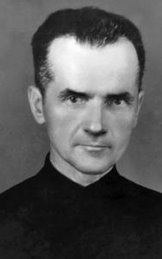
The next man is Fr. Mary Phillip, OCD. He was at the Basilica of the Shrine of the Immaculate Conception in San Antonio. He was a great preacher and a devoted servant of God. Along with his many priestly responsibilities, he also worked on the grounds doing edging and weed-whacking. He had a serious curvature of his spine in the neck which made it appear that he was constantly looking at the ground.
Shortly before he died, he had an operation done to correct the defect in his neck. One might say the procedure was successful but a common side effect - paralysis from the neck down - also occurred. He spent the rest of his life in a wheelchair, unable to use his arms or legs.
This is one of my favorite quotes from St. Teresa:

 In your mercy of prayers please remember to pray for the repose of the souls of these two men.
May their souls, and all the souls of the Faithful Departed, rest in peace.
This week we remember two men who died during the previous decade.
The first person is my grandfather, Francis M. Donahue, Sr. He died shortly after 9/11, which was also shortly after the birth of our son Marcellinus. At first we did not see how any of us could go to the funeral in Florida until Carolyn came up with the idea of me going with just the newborn baby.
That is what I did. This was before all the complex security measures started by the TSA. Instead there were uniformed soldiers hanging about in the airport lobby with M-16's over their shoulders. It was still rather easy to get onto an airplane, even with a huge stroller and a crying baby.
I recall passengers on the Southwest Airlines flight moving away from us when they saw us selecting a seat. And the young woman who took the seat next to us had to endure all sorts of comments about 'our' baby until I told the stewardess that she was not with me on the flight.
It was a nice visit and opportunity to pray for the repose of the soul of my grandfather.


The next man is Fr. Mary Phillip, OCD. He was at the Basilica of the Shrine of the Immaculate Conception in San Antonio. He was a great preacher and a devoted servant of God. Along with his many priestly responsibilities, he also worked on the grounds doing edging and weed-whacking. He had a serious curvature of his spine in the neck which made it appear that he was constantly looking at the ground.
Shortly before he died, he had an operation done to correct the defect in his neck. One might say the procedure was successful but a common side effect - paralysis from the neck down - also occurred. He spent the rest of his life in a wheelchair, unable to use his arms or legs.
This is one of my favorite quotes from St. Teresa:


May their souls, and all the souls of the Faithful Departed, rest in peace.
Sunday, August 21, 2011
Good Quote from St. Vincent de Paul
You will find out that Charity is a heavy burden to carry, heavier than the kettle of soup and the full basket. But you will keep your gentleness and your smile. It is not enough to give soup and bread. This the rich can do. You are the servant of the poor, always smiling and good-humored. They are your masters, terribly sensitive and exacting master you will see. and the uglier and the dirtier they will be, the more unjust and insulting, the more love you must give them. It is only for your love alone that the poor will forgive you the bread you give to them.
St. Vincent de Paul
Sent from my iPhone
Monday, August 01, 2011
Thoughts at 113 Degrees
As I drove toward downtown Fort Worth, with the thermometer on the dashboard reaching 113 degrees Fahrenheit, I was reminded of a passage from C.S. Lewis' book Out of the Silent Planet, when an Earth-bound ship passes almost too close to the Sun:
"It got less...."
 It will, in December.
"And still the thermometer rose. The walls of the ship were too hot to touch. It was obvious that a crisis was approaching. In the next few hours it must kill them or get less.

Saturday, July 30, 2011
Good Poetry: The Hound of Heaven, by Francis Thompson
I FLED Him, down the nights and down the days;
I fled Him, down the arches of the years;
I fled Him, down the labyrinthine ways
Of my own mind; and in the mist of tears
I hid from Him, and under running laughter.
Up vistaed hopes I sped;
And shot, precipitated,
Adown Titanic glooms of chasmèd fears,
From those strong Feet that followed, followed after.
But with unhurrying chase,
And unperturbèd pace,
Deliberate speed, majestic instancy,
They beat—and a Voice beat
More instant than the Feet—
‘All things betray thee, who betrayest Me.’
I pleaded, outlaw-wise,
By many a hearted casement, curtained red,
Trellised with intertwining charities;
(For, though I knew His love Who followèd,
Yet was I sore adread
Lest, having Him, I must have naught beside).
But, if one little casement parted wide,
The gust of His approach would clash it to.
Fear wist not to evade, as Love wist to pursue.
Across the margent of the world I fled,
And troubled the gold gateways of the stars,
Smiting for shelter on their clangèd bars;
Fretted to dulcet jars
And silvern chatter the pale ports o’ the moon.
I said to Dawn: Be sudden—to Eve: Be soon;
With thy young skiey blossoms heap me over
From this tremendous Lover—
Float thy vague veil about me, lest He see!
I tempted all His servitors, but to find
My own betrayal in their constancy,
In faith to Him their fickleness to me,
Their traitorous trueness, and their loyal deceit.
To all swift things for swiftness did I sue;
Clung to the whistling mane of every wind.
But whether they swept, smoothly fleet,
The long savannahs of the blue;
Or whether, Thunder-driven,
They clanged his chariot ’thwart a heaven,
Plashy with flying lightnings round the spurn o’ their feet:—
Fear wist not to evade as Love wist to pursue.
Still with unhurrying chase,
And unperturbèd pace,
Deliberate speed, majestic instancy,
Came on the following Feet,
And a Voice above their beat—
‘Naught shelters thee, who wilt not shelter Me.’
I sought no more that after which I strayed
In face of man or maid;
But still within the little children’s eyes
Seems something, something that replies,
They at least are for me, surely for me!
I turned me to them very wistfully;
But just as their young eyes grew sudden fair
With dawning answers there,
Their angel plucked them from me by the hair.
‘Come then, ye other children, Nature’s—share
With me’ (said I) ‘your delicate fellowship;
Let me greet you lip to lip,
Let me twine with you caresses,
Wantoning
With our Lady-Mother’s vagrant tresses,
Banqueting
With her in her wind-walled palace,
Underneath her azured daïs,
Quaffing, as your taintless way is,
From a chalice
Lucent-weeping out of the dayspring.’
So it was done:
I in their delicate fellowship was one—
Drew the bolt of Nature’s secrecies.
I knew all the swift importings
On the wilful face of skies;
I knew how the clouds arise
Spumèd of the wild sea-snortings;
All that’s born or dies
Rose and drooped with; made them shapers
Of mine own moods, or wailful or divine;
With them joyed and was bereaven.
I was heavy with the even,
When she lit her glimmering tapers
Round the day’s dead sanctities.
I laughed in the morning’s eyes.
I triumphed and I saddened with all weather,
Heaven and I wept together,
And its sweet tears were salt with mortal mine;
Against the red throb of its sunset-heart
I laid my own to beat,
And share commingling heat;
But not by that, by that, was eased my human smart.
In vain my tears were wet on Heaven’s grey cheek.
For ah! we know not what each other says,
These things and I; in sound I speak—
Their sound is but their stir, they speak by silences.
Nature, poor stepdame, cannot slake my drouth;
Let her, if she would owe me,
Drop yon blue bosom-veil of sky, and show me
The breasts o’ her tenderness:
Never did any milk of hers once bless
My thirsting mouth.
Nigh and nigh draws the chase,
With unperturbèd pace,
Deliberate speed, majestic instancy;
And past those noisèd Feet
A voice comes yet more fleet—
‘Lo! naught contents thee, who content’st not Me!’
Naked I wait Thy love’s uplifted stroke!
My harness piece by piece Thou hast hewn from me,
And smitten me to my knee;
I am defenceless utterly.
I slept, methinks, and woke,
And, slowly gazing, find me stripped in sleep.
In the rash lustihead of my young powers,
I shook the pillaring hours
And pulled my life upon me; grimed with smears,
I stand amid the dust o’ the mounded years—
My mangled youth lies dead beneath the heap.
My days have crackled and gone up in smoke,
Have puffed and burst as sun-starts on a stream.
Yea, faileth now even dream
The dreamer, and the lute the lutanist;
Even the linked fantasies, in whose blossomy twist
I swung the earth a trinket at my wrist,
Are yielding; cords of all too weak account
For earth with heavy griefs so overplussed.
Ah! is Thy love indeed
A weed, albeit an amaranthine weed,
Suffering no flowers except its own to mount?
Ah! must—
Designer infinite!—
Ah! must Thou char the wood ere Thou canst limn with it?
My freshness spent its wavering shower i’ the dust;
And now my heart is as a broken fount,
Wherein tear-drippings stagnate, spilt down ever
From the dank thoughts that shiver
Upon the sighful branches of my mind.
Such is; what is to be?
The pulp so bitter, how shall taste the rind?
I dimly guess what Time in mists confounds;
Yet ever and anon a trumpet sounds
From the hid battlements of Eternity;
Those shaken mists a space unsettle, then
Round the half-glimpsèd turrets slowly wash again.
But not ere him who summoneth
I first have seen, enwound
With glooming robes purpureal, cypress-crowned;
His name I know, and what his trumpet saith.
Whether man’s heart or life it be which yields
Thee harvest, must Thy harvest-fields
Be dunged with rotten death?
Now of that long pursuit
Comes on at hand the bruit;
That Voice is round me like a bursting sea:
‘And is thy earth so marred,
Shattered in shard on shard?
Lo, all things fly thee, for thou fliest Me!
Strange, piteous, futile thing!
Wherefore should any set thee love apart?
Seeing none but I makes much of naught’ (He said),
‘And human love needs human meriting:
How hast thou merited—
Of all man’s clotted clay the dingiest clot?
Alack, thou knowest not
How little worthy of any love thou art!
Whom wilt thou find to love ignoble thee,
Save Me, save only Me?
All which I took from thee I did but take,
Not for thy harms,
But just that thou might’st seek it in My arms.
All which thy child’s mistake
Fancies as lost, I have stored for thee at home:
Rise, clasp My hand, and come!’
Halts by me that footfall:
Is my gloom, after all,
Shade of His hand, outstretched caressingly?
‘Ah, fondest, blindest, weakest,
I am He Whom thou seekest!
Thou dravest love from thee, who dravest Me.’
I fled Him, down the arches of the years;
I fled Him, down the labyrinthine ways
Of my own mind; and in the mist of tears
I hid from Him, and under running laughter.
Up vistaed hopes I sped;
And shot, precipitated,
Adown Titanic glooms of chasmèd fears,
From those strong Feet that followed, followed after.
But with unhurrying chase,
And unperturbèd pace,
Deliberate speed, majestic instancy,
They beat—and a Voice beat
More instant than the Feet—
‘All things betray thee, who betrayest Me.’
I pleaded, outlaw-wise,
By many a hearted casement, curtained red,
Trellised with intertwining charities;
(For, though I knew His love Who followèd,
Yet was I sore adread
Lest, having Him, I must have naught beside).
But, if one little casement parted wide,
The gust of His approach would clash it to.
Fear wist not to evade, as Love wist to pursue.
Across the margent of the world I fled,
And troubled the gold gateways of the stars,
Smiting for shelter on their clangèd bars;
Fretted to dulcet jars
And silvern chatter the pale ports o’ the moon.
I said to Dawn: Be sudden—to Eve: Be soon;
With thy young skiey blossoms heap me over
From this tremendous Lover—
Float thy vague veil about me, lest He see!
I tempted all His servitors, but to find
My own betrayal in their constancy,
In faith to Him their fickleness to me,
Their traitorous trueness, and their loyal deceit.
To all swift things for swiftness did I sue;
Clung to the whistling mane of every wind.
But whether they swept, smoothly fleet,
The long savannahs of the blue;
Or whether, Thunder-driven,
They clanged his chariot ’thwart a heaven,
Plashy with flying lightnings round the spurn o’ their feet:—
Fear wist not to evade as Love wist to pursue.
Still with unhurrying chase,
And unperturbèd pace,
Deliberate speed, majestic instancy,
Came on the following Feet,
And a Voice above their beat—
‘Naught shelters thee, who wilt not shelter Me.’
I sought no more that after which I strayed
In face of man or maid;
But still within the little children’s eyes
Seems something, something that replies,
They at least are for me, surely for me!
I turned me to them very wistfully;
But just as their young eyes grew sudden fair
With dawning answers there,
Their angel plucked them from me by the hair.
‘Come then, ye other children, Nature’s—share
With me’ (said I) ‘your delicate fellowship;
Let me greet you lip to lip,
Let me twine with you caresses,
Wantoning
With our Lady-Mother’s vagrant tresses,
Banqueting
With her in her wind-walled palace,
Underneath her azured daïs,
Quaffing, as your taintless way is,
From a chalice
Lucent-weeping out of the dayspring.’
So it was done:
I in their delicate fellowship was one—
Drew the bolt of Nature’s secrecies.
I knew all the swift importings
On the wilful face of skies;
I knew how the clouds arise
Spumèd of the wild sea-snortings;
All that’s born or dies
Rose and drooped with; made them shapers
Of mine own moods, or wailful or divine;
With them joyed and was bereaven.
I was heavy with the even,
When she lit her glimmering tapers
Round the day’s dead sanctities.
I laughed in the morning’s eyes.
I triumphed and I saddened with all weather,
Heaven and I wept together,
And its sweet tears were salt with mortal mine;
Against the red throb of its sunset-heart
I laid my own to beat,
And share commingling heat;
But not by that, by that, was eased my human smart.
In vain my tears were wet on Heaven’s grey cheek.
For ah! we know not what each other says,
These things and I; in sound I speak—
Their sound is but their stir, they speak by silences.
Nature, poor stepdame, cannot slake my drouth;
Let her, if she would owe me,
Drop yon blue bosom-veil of sky, and show me
The breasts o’ her tenderness:
Never did any milk of hers once bless
My thirsting mouth.
Nigh and nigh draws the chase,
With unperturbèd pace,
Deliberate speed, majestic instancy;
And past those noisèd Feet
A voice comes yet more fleet—
‘Lo! naught contents thee, who content’st not Me!’
Naked I wait Thy love’s uplifted stroke!
My harness piece by piece Thou hast hewn from me,
And smitten me to my knee;
I am defenceless utterly.
I slept, methinks, and woke,
And, slowly gazing, find me stripped in sleep.
In the rash lustihead of my young powers,
I shook the pillaring hours
And pulled my life upon me; grimed with smears,
I stand amid the dust o’ the mounded years—
My mangled youth lies dead beneath the heap.
My days have crackled and gone up in smoke,
Have puffed and burst as sun-starts on a stream.
Yea, faileth now even dream
The dreamer, and the lute the lutanist;
Even the linked fantasies, in whose blossomy twist
I swung the earth a trinket at my wrist,
Are yielding; cords of all too weak account
For earth with heavy griefs so overplussed.
Ah! is Thy love indeed
A weed, albeit an amaranthine weed,
Suffering no flowers except its own to mount?
Ah! must—
Designer infinite!—
Ah! must Thou char the wood ere Thou canst limn with it?
My freshness spent its wavering shower i’ the dust;
And now my heart is as a broken fount,
Wherein tear-drippings stagnate, spilt down ever
From the dank thoughts that shiver
Upon the sighful branches of my mind.
Such is; what is to be?
The pulp so bitter, how shall taste the rind?
I dimly guess what Time in mists confounds;
Yet ever and anon a trumpet sounds
From the hid battlements of Eternity;
Those shaken mists a space unsettle, then
Round the half-glimpsèd turrets slowly wash again.
But not ere him who summoneth
I first have seen, enwound
With glooming robes purpureal, cypress-crowned;
His name I know, and what his trumpet saith.
Whether man’s heart or life it be which yields
Thee harvest, must Thy harvest-fields
Be dunged with rotten death?
Now of that long pursuit
Comes on at hand the bruit;
That Voice is round me like a bursting sea:
‘And is thy earth so marred,
Shattered in shard on shard?
Lo, all things fly thee, for thou fliest Me!
Strange, piteous, futile thing!
Wherefore should any set thee love apart?
Seeing none but I makes much of naught’ (He said),
‘And human love needs human meriting:
How hast thou merited—
Of all man’s clotted clay the dingiest clot?
Alack, thou knowest not
How little worthy of any love thou art!
Whom wilt thou find to love ignoble thee,
Save Me, save only Me?
All which I took from thee I did but take,
Not for thy harms,
But just that thou might’st seek it in My arms.
All which thy child’s mistake
Fancies as lost, I have stored for thee at home:
Rise, clasp My hand, and come!’
Halts by me that footfall:
Is my gloom, after all,
Shade of His hand, outstretched caressingly?
‘Ah, fondest, blindest, weakest,
I am He Whom thou seekest!
Thou dravest love from thee, who dravest Me.’
Wednesday, July 20, 2011
Riding Shotgun VII
This week we pray for the repose of the souls of two people who died recently; Dr. Warren Carroll and Mrs. Betty Garza.

Mrs. Betty Garza died on July 11, 2011. She was preceded in death by her husband several years earlier, and we got to know her while we attended Blessed Sacrament Catholic Church in Dallas. Here she is pictured along with Fr. Paul Weinberger. Betty never remarried, and never removed her wedding ring. She was heard to say that she married her husband, Dr. Marc Garza, for all eternity. She was a wonderful example of fidelity to all of us.

These two folks have one thing in common: neither was blessed with any children, yet they contributed greatly to the common good. For Mrs. Garza, she suffered several miscarriages.
Both Warren Carroll and Betty Garza are examples of the good all people can do in whatever vocation they are called to. Both were called to the married life where the blessing of children was denied them. So they probably never came home to a closet dusted with baby powder - as I just did - but they also missed out on the amusement of watching an 8-, 9-, and 10-year old boys cleaning up the mess.
As a reminder, I include below a holy card of St. Benedict I received from Christendom College recently:

 Eternal rest, grant unto them, oh Lord, and may perpetual light shine upon them.
May their souls, and all the souls of the Faithful Departed, rest in peace.
Mrs. Betty Garza died on July 11, 2011. She was preceded in death by her husband several years earlier, and we got to know her while we attended Blessed Sacrament Catholic Church in Dallas. Here she is pictured along with Fr. Paul Weinberger. Betty never remarried, and never removed her wedding ring. She was heard to say that she married her husband, Dr. Marc Garza, for all eternity. She was a wonderful example of fidelity to all of us.

These two folks have one thing in common: neither was blessed with any children, yet they contributed greatly to the common good. For Mrs. Garza, she suffered several miscarriages.
Both Warren Carroll and Betty Garza are examples of the good all people can do in whatever vocation they are called to. Both were called to the married life where the blessing of children was denied them. So they probably never came home to a closet dusted with baby powder - as I just did - but they also missed out on the amusement of watching an 8-, 9-, and 10-year old boys cleaning up the mess.
As a reminder, I include below a holy card of St. Benedict I received from Christendom College recently:


May their souls, and all the souls of the Faithful Departed, rest in peace.
Tuesday, July 19, 2011
Amyoplasia Congenita Syndrome
Name: Amyoplasia Congenita Disruptive Syndrome
General:
Part of Arthrogryposis Multiplex Congenita
Multiple joint contractures
Two forms:
Neuropathic: reduced number of anterior horn cells; demyelinated motor roots; fewer axons in peripheral nerve roots.
Myopathic: contractors due to lack of intrauterine movement.
Airway:
Micrognathia
Cleft palate
Respiratory:
Hypoplastic lungs
Diaphragmatic hernia
Hydrothorax
Gastrointestinal:
Gastroschisis
Pyloric stenosis
Musculoskeletal:
Scoliosis
Contractures
Joint deformities
Considerations:
Difficult airway
Positioning nightmare
Difficult intravenous access possible
No relationship between arthrogryposis syndromes and MH
Links:
Arthrogryposis Multiplex Congenita
Guerin-Stern Syndrome
Otto Syndrome
Rocher-Sheldon Syndrome
Rossi Syndrome
Congenital Arthromyodysplastic Syndrome
Myodysplasia Foetalis Deformans
Myodystrophia Foetalis Deformans
References:
Sunday, July 17, 2011
July 17, 1794

A shining example of fortitude, faith, obedience, and humility. They died as obedient sisters to the last, asking for permission to die from their Prioress before climbing up to the guillotine.
Saturday, July 16, 2011
The Holy Martyrs of Compeigne
- Laudate Dominum omnes gentes
- Laudate eum, omnes populi
- Quoniam confirmata est
- Super nos misericordia eius,
- Et veritas Domini manet in aeternum.
- Gloria Patri et Filio et Spiritui Sancto.
- Sicut erat in principio, et nunc, et semper.
- Et in saecula saeculorum.
- Amen.*
This weekend we remember the Holy Martyrs of Compeigne, who were beheaded with the guillotine on July 17, 1794 in Paris, France.
This is a picture of a small statue of the Blessed Mother holding Jesus, which was kissed by each nun before she climbed the ladder up to the executioner:

The nuns are listed below, or can be found at this website:
- Madeleine-Claudine Ledoine (Mother Teresa of St. Augustine), prioress, b. in Paris, 22 Sept., 1752, professed 16 or 17 May, 1775;
- Marie-Anne (or Antoinette) Brideau (Mother St. Louis), sub-prioress, b. at Belfort, 7 Dec., 1752, professed 3 Sept, 1771;
- Marie-Anne Piedcourt (Sister of Jesus Crucified), choir-nun, b. 1715, professed 1737; on mounting the scaffold she said "I forgive you as heartily as I wish God to forgive me";
- Anne-Marie-Madeleine Thouret (Sister Charlotte of the Resurrection), sacristan, b. at Mouy, 16 Sept., 1715, professed 19 Aug., 1740, twice sub-prioress in 1764 and 1778. Her portrait is reproduced opposite p. 2 of Miss Willson's work cited below;
- Marie-Antoniette or Anne Hanisset (Sister Teresa of the Holy Heart of Mary), b. at Rheims in 1740 or 1742, professed in 1764;
- Marie-Françoise Gabrielle de Croissy (Mother Henriette of Jesus), b. in Paris, 18 June, 1745, professed 22 Feb., 1764, prioress from 1779 to 1785;
- Marie-Gabrielle Trézel (Sister Teresa of St. Ignatius), choir-nun, b. at Compiègne, 4 April, 1743, professed 12 Dec., 1771;
- Rose-Chrétien de la Neuville, widow, choir-nun (Sister Julia Louisa of Jesus), b. at Loreau (or Evreux), in 1741, professed probably in 1777;
- Anne Petras (Sister Mary Henrietta of Providence), choir-nun, b. at Cajarc (Lot), 17 June, 1760, professed 22 Oct., 1786.
- Concerning Sister Euphrasia of the Immaculate Conception accounts vary. Miss Willson says that her name was Marie Claude Cyprienne Brard, and that she was born 12 May, 1736; Pierre, that her name was Catherine Charlotte Brard, and that she was born 7 Sept., 1736. She was born at Bourth, and professed in 1757;
- Marie-Geneviève Meunier (Sister Constance), novice, b. 28 May, 1765, or 1766, at St. Denis, received the habit 16 Dec., 1788. She mounted the scaffold singing "Laudate Dominum". In addition to the above, three lay sisters suffered and two tourières. The lay sisters are:
- Angélique Roussel (Sister Mary of the Holy Ghost), lay sister, b. at Fresnes, 4 August, 1742, professed 14 May, 1769;
- Marie Dufour (Sister St. Martha), lay sister, b. at Beaune, 1 or 2 Oct., 1742, entered the community in 1772;
- Julie or Juliette Vérolot (Sister St. Francis Xavier), lay sister, b. at Laignes or Lignières, 11 Jan., 1764, professed 12 Jan., 1789.
I have reviewed the book To Quell the Terror in the past; I strongly recommend this book rather than the fictionalized account of this incident found in the more famous book called The Song at the Scaffold by Gertrude von Le Fort. Another great reference I found online is this blog.
Before going out to their execution, the Prioress obtained some hot chocolate for the nuns; it was their only nutrition they received for the last 24 hours of their lives. In honor of them, I plan on making a big cup of hot chocolate to drink in honor of these wonderful women who died 217 years ago this weekend.
Besides, I have to de-scale my coffee maker this weekend.
*Praise the Lord, all nations;
Praise Him, all people.
For He has bestowed
His mercy upon us,
And the truth of the Lord endures forever.
Glory to the Father and to the Son and to the Holy Spirit,
as it was in the beginning, is now, and forever,
and for generations of generations.
Amen.
Wednesday, July 13, 2011
Riding Shotgun VI

This week we shall pray for my brother, Fr. Denis Donahue, who was ordained to the priesthood on May 19, 1990.
He is a good brother and a good priest. Like all priests, he needs our prayers and sacrifices to help him in his vocation.

22nd Anniversary Video
Here is a video Carolyn made commemorating our 22nd anniversary. All of these pictures are from the past year. Thank you Carolyn, and thank you, God, for such a wonderful wife and children. We are truly blessed beyond measure.
Wednesday, July 06, 2011

Tuesday, July 05, 2011
Riding Shotgun V
I was off last week, so I did not change the prayer cards in the car.
This week, I have two prayer cards along for the ride. One is a prayer before surgery, another is a prayer card for one of the sisters at the Carmelite convent in Irving who died in March.
First, let us look at the prayer before surgery:
 I like this picture because it reminds me of places where the Crucifix is placed along a path, inviting the pilgrim to pause for a moment's prayer or reflection. I can think of a garden in San Antonio,or the Grotto in Emmittsburg, Maryland, where one can pray the Stations of the Cross while enjoying the great outdoors. It is a bit more difficult with little children, though.
On the back, there is a prayer for those about to have surgery:
 I love the fact that it includes an act of contrition, because God knows that people do die in surgery. It is my strong desire that I would be able to receive the Anointing of the Sick and be able to make a good confession before any operation I might need.
In my profession, there have been times where I have anticipated the death of a patient - especially in the case of trauma patients. At that point, when general anesthesia is more resuscitation than anesthesia, I have actually leaned close to the head of the patient and said prayers for them. I tell them that they are in danger of dying, that God loves them, and then say an act of contrition for them. If there is any chance that they have any awareness of what is happening to them, I hope to help them prepare for the end of their life.
It has been years since I have had to do this, and it saddens me to think of those who have died in the operating room after some act of violence or imprudence.
---------------------------------------------------------------------------------------------
 -------------------------------------------------------------------------------------------
The prayer card for Mother Jeanne Marie Ange of the Infant Jesus, OCD, I think also has a medical connection. I have to check with my sources, but I believe that Mother was a nurse and then a CRNA before entering Carmel.
 I don't recall meeting Mother, because most of our contact was with the porter - and even that was through a screen. I suspect she was not the one to run and answer the door whenever we dropped something off there. We did see the sisters around All Saints Day, when the children would dress up as saints and the sisters would have to guess their names.
One year, I was a prop for one of my daughters who was dressed up as St. Therese of Liseaux. I just had to stand next to her with a handkerchief over my face; that is what Louis Martin did a lot of around the end of his life. The sisters figured it out, though.

In totally unrelated news, the 'Big Blue' got new shocks and tires. Now it is a smoother and safer ride for the whole family.

This week, I have two prayer cards along for the ride. One is a prayer before surgery, another is a prayer card for one of the sisters at the Carmelite convent in Irving who died in March.
First, let us look at the prayer before surgery:
 I like this picture because it reminds me of places where the Crucifix is placed along a path, inviting the pilgrim to pause for a moment's prayer or reflection. I can think of a garden in San Antonio,or the Grotto in Emmittsburg, Maryland, where one can pray the Stations of the Cross while enjoying the great outdoors. It is a bit more difficult with little children, though.
On the back, there is a prayer for those about to have surgery:
 I love the fact that it includes an act of contrition, because God knows that people do die in surgery. It is my strong desire that I would be able to receive the Anointing of the Sick and be able to make a good confession before any operation I might need.
In my profession, there have been times where I have anticipated the death of a patient - especially in the case of trauma patients. At that point, when general anesthesia is more resuscitation than anesthesia, I have actually leaned close to the head of the patient and said prayers for them. I tell them that they are in danger of dying, that God loves them, and then say an act of contrition for them. If there is any chance that they have any awareness of what is happening to them, I hope to help them prepare for the end of their life.
It has been years since I have had to do this, and it saddens me to think of those who have died in the operating room after some act of violence or imprudence.
---------------------------------------------------------------------------------------------
 -------------------------------------------------------------------------------------------
The prayer card for Mother Jeanne Marie Ange of the Infant Jesus, OCD, I think also has a medical connection. I have to check with my sources, but I believe that Mother was a nurse and then a CRNA before entering Carmel.
 I don't recall meeting Mother, because most of our contact was with the porter - and even that was through a screen. I suspect she was not the one to run and answer the door whenever we dropped something off there. We did see the sisters around All Saints Day, when the children would dress up as saints and the sisters would have to guess their names.
One year, I was a prop for one of my daughters who was dressed up as St. Therese of Liseaux. I just had to stand next to her with a handkerchief over my face; that is what Louis Martin did a lot of around the end of his life. The sisters figured it out, though.

In totally unrelated news, the 'Big Blue' got new shocks and tires. Now it is a smoother and safer ride for the whole family.
Friday, July 01, 2011
For Carolyn
The quote from Proverbs below reminds me of Carolyn.
Here is a picture of St. Frances of Rome. She was a Wife, Mother, and Religious who lived from 1384 to 1440:

On the back is this quote from Proverbs, which is appropriate to recall on our wedding anniversary:
A good wife who can find?
She is far more precious than jewels.
The heart of her husband trusts in her,
and he will have no lack of gain.
She does him good, and not harm,
all the days of her life.
She seeks wool and flax,
and works with willing hands.
She puts her hands to the distaff,
and her hands hold the spindle.
She opens her hand to the poor,
and reaches out her hands to the needy.
Charm is deceitful, and beauty is vain,
but a woman who fears the Lord is to be
praised.
Give her of the fruit of her hands,
and let her works praise her in the gates.
Proverbs 31:10-13, 19-20, 30-31
When I first typed this in, I misspelled 'gain' for 'gin,' which changed the sentence above to:
"The heart of her husband trusts in her, and he will have no lack of gin."
Well now.
Thankfully God has given me a wonderful wife rather than an endless supply of gin.
Here is an icon I bought at Clear Creek Monastery for Carolyn. It is the Holy Family:
 Here we are on our wedding day:

Here are the flowers I sent to Carolyn today. I am so blessed with her, and I thank God for her in my life!

Here is a picture of St. Frances of Rome. She was a Wife, Mother, and Religious who lived from 1384 to 1440:

On the back is this quote from Proverbs, which is appropriate to recall on our wedding anniversary:
A good wife who can find?
She is far more precious than jewels.
The heart of her husband trusts in her,
and he will have no lack of gain.
She does him good, and not harm,
all the days of her life.
She seeks wool and flax,
and works with willing hands.
She puts her hands to the distaff,
and her hands hold the spindle.
She opens her hand to the poor,
and reaches out her hands to the needy.
Charm is deceitful, and beauty is vain,
but a woman who fears the Lord is to be
praised.
Give her of the fruit of her hands,
and let her works praise her in the gates.
Proverbs 31:10-13, 19-20, 30-31
When I first typed this in, I misspelled 'gain' for 'gin,' which changed the sentence above to:
"The heart of her husband trusts in her, and he will have no lack of gin."
Well now.
Thankfully God has given me a wonderful wife rather than an endless supply of gin.
Here is an icon I bought at Clear Creek Monastery for Carolyn. It is the Holy Family:
 Here we are on our wedding day:
Here are the flowers I sent to Carolyn today. I am so blessed with her, and I thank God for her in my life!

Thursday, June 30, 2011
22nd Anniversary Celebration
Here we are, another year in love with each other, and rather than making a new video I shall just re-publish the 21st Anniversary video. I wish we had another new face to introduce this year, but that was not God's will. We are still praying for more children while we care for the ones we have been given by Him.
Here is the link for the video for all of you reading this on facebook.
Here is the link to the Anniversary photograph collection. Watch as the number of children - and their sizes - grow with every year.
I thank God for the blessing of my wife Carolyn, and I pray every day that I can be a better husband for her. She is the greatest gift on Earth to me.

Here is the link for the video for all of you reading this on facebook.
Here is the link to the Anniversary photograph collection. Watch as the number of children - and their sizes - grow with every year.
I thank God for the blessing of my wife Carolyn, and I pray every day that I can be a better husband for her. She is the greatest gift on Earth to me.

Monday, June 20, 2011
Riding Shotgun IV

This week I pray for the repose of the soul of Fr. James Downey, O.S.B., who died January 29, 2008.
I met Fr. Downey while living in Ann Arbor, Michigan. I was a resident and fellow at the time, and I met this good priest through one of Carolyn's sisters. He would call me occasionally to ask for some medical advice; after a while he started to refer to me as his doctor.
I recall on Ash Wednesday, 1996, attending a private Mass and distribution of ashes at Fr. Downey's residence at 5 a.m. I was on call that day, and did not expect to get to Mass because of the full schedule we had that day. It was beautiful to be there in the presence of Our Lord as well as such a good and holy priest.
After we moved to Texas we did not see him very much. Carolyn visited him while he was staying at St. John Cantius in Chicago. While she was happy to see him, she was also struck with how much he had aged in just a few years. Shortly afterwards, Fr. Downey returned to the Benedictine Abbey in Atchison, Kansas for the last years of his life.
We found out about his death on a weekday in late January, 2008. I recall going to work the next day, and thinking about how I had never found time to go and see Father one more time. As the day went on, I started thinking that Atchison was not that far from Dallas, and that we could leave after work on Friday to be there for the funeral on Saturday. When I called Carolyn to tell her about my thoughts about taking a road trip, I found that she was already planning it. I hadn't told her about my plans, and yet she knew what was in my heart.
We drove to Kansas on Friday night, and got up to go to the funeral on Saturday afternoon. The monastery - St. Benedict's Abbey - was located on the campus of Benedictine College. It was a beautiful campus, and was experiencing unseasonably mild weather during that weekend, and we were very impressed with the college and area. It appears that Benedictine College is one of several American schools which are striving to become centers of orthodoxy and obedience to the teachings of the Catholic Church. That was refreshing to see.
I dropped off the family at the entrance to the abbey and then went to park the van. I was a few minutes late getting into the church, and so I missed seeing my old friend one more time. They had just closed the casket as I walked in.
After Mass, we went to a luncheon reception held in the refectory, or dining room, of the monastery. We got to meet some of Fr. Downey's fellow monks, and some alumni from the school. All of them, once they realized how many children we had, encouraged us to consider Benedictine College when our children were ready for a higher education.
I wrote about Fr. Downey back then in this post. Little did I know that in two month's time we would be having a funeral for one of our own. Lately, St. Benedict seems to have become more important to our family, especially with the blessings that have come to us from such places as the Abbey in Cullman, Alabama, the Abbey in Atchison, Kansas, and now the Abbey in Clear Creek near Hulbert, Oklahoma. All of these places, and the monks who live there, have been a source of strength and consolation to our whole family.
I am glad that one of our sons is named after such a holy saint, Saint Benedict.
Fr. James Downey, O.S.B., Monk of St. Benedict's Abbey
Eternal rest grant unto him, Oh Lord, and may perpetual light shine upon him.
And may his soul and all the souls of the faithful departed, rest in peace.

Sunday, June 19, 2011
The Most Catholic of Firearms

What is the most Catholic of all firearms?
One would assume an Italian rifle or shotgun would take this prize. Perhaps something which was given to Pope Benedict XVI, or one of his predecessors, is right now gathering dust in the corner of a storage room where gifts are placed until they can be put on display somewhere in the Vatican.
Think about it: every gift received by any head of state must be kept in some sort of place of honor, because they cannot be cast aside without offending the giver. Unless, of course, one is the current president of our fair country, and decided that a bust of Winston Churchill given to President 'W' Bush after 9/11 could be returned to the British. Hopefully, President Obama kept the pen and box made from the hull of a British Navy ship which combated slavery.
I would argue that the award for the most Catholic firearm would not go to any Italian firearm; nor would I give that distinction to the M1 Garand, the World War II rifle designed by John Cantius Garand. That is a statue of St. John Cantius above, and the M1 Garand rifle below:

No, I think the award for the most Catholic of Firearms belongs to a Soviet rifle which has many names but is generally referred to as the Mosin Nagant rifle. Back in February, I wrote a little essay about something I picked up at a local gun store. It was a Mosin Nagant 91/30, built in 1942, and was only about $120. Over the past few months, I have been slowly reading up on this weapon, taking it apart, cleaning it, and putting it back together again. I found the experience fascinating, as the history behind this rifle is almost as interesting as its function as a weapon.
Here is the Mosin Nagant when I first took a picture of it:
 Now look what has happened. Where once there was one, now there are three! They are almost as prodigious as Tribbles, and that is why they are considered by me to be the Most Catholic of Firearms:
The original Mosin Nagant is at the top of the picture. Another 91/30 is at the bottom; in between is an M44, which is a carbine version of the Mosin Nagant rifle and comes with an attached bayonet. I am still in the process of cleaning up those other two rifles, and thought that I would let them sit out in the sun to loosen up some of the lubricant encasing them. Today is another day with strong winds out of the South, and temperatures above 100, and it did not take long before I had my hands full wiping off the 'cosmoline' lubricant.
I think cosmoline is the Russian version of Vaseline, only darker. Perhaps Vaseline gets dark after a couple of decades.
Along with the rifles, I pulled out the cartridge holders, oil and solvent cans, and the cleaning and tool kit which came with the 91/30's. They were also encased in cosmoline, and I thought I would remove the cosmoline using the North Texas heat rather than the household oven like this man did:
Ew. Instead I put the tool and cleaning instruments as well as the oil/solvent cans out in the back yard. I love my wife and children too much to do this kind of stuff inside. All that brown stuff is the cosmoline:

Note that the two cans are shaped differently. There are collectors who know all about anything that is associated with the Mosin Nagant, and they could tell me where the can originated and how it was designed. I am not that interested in that, though.
The only tool needed to service the Mosin Nagant is this little piece of metal. It has a screwdriver blade on one end, and the oval shaped hole is to help placement or removal of the bayonet. The most important thing on this tool are the series of cuts made into the side of it. Those cuts are used to verify the distance which the firing pin extends out of the bolt. If it does not come out enough, the pin won't contact the primer. If it extends too far, hot gases may spray back at the user when the firing pin penetrates the primer cover. So this is a vital tool to keep the rifle functioning.

I hope that my next blog entry on firearms will be me shooting one - or all - of these rifles.
Psychologist Dr. Ray Guarendi, who along with his wife adopted 10 children, likes to talk about the 'unplanned adoption' they had, when they ended up with one more child than they expected. Well, since we are doing the Dave Ramsey Total Money Makeover, there is no room for impulsive buying at gun shows - at least not without consulting with Carolyn. So while I would consider the Mosin Nagant to be gifted with the ability to reproduce quickly, I don't expect to see any more new additions to the family gun collection.
We would rather see other, more human, additions to our family:

The only tool needed to service the Mosin Nagant is this little piece of metal. It has a screwdriver blade on one end, and the oval shaped hole is to help placement or removal of the bayonet. The most important thing on this tool are the series of cuts made into the side of it. Those cuts are used to verify the distance which the firing pin extends out of the bolt. If it does not come out enough, the pin won't contact the primer. If it extends too far, hot gases may spray back at the user when the firing pin penetrates the primer cover. So this is a vital tool to keep the rifle functioning.

I hope that my next blog entry on firearms will be me shooting one - or all - of these rifles.
Psychologist Dr. Ray Guarendi, who along with his wife adopted 10 children, likes to talk about the 'unplanned adoption' they had, when they ended up with one more child than they expected. Well, since we are doing the Dave Ramsey Total Money Makeover, there is no room for impulsive buying at gun shows - at least not without consulting with Carolyn. So while I would consider the Mosin Nagant to be gifted with the ability to reproduce quickly, I don't expect to see any more new additions to the family gun collection.
We would rather see other, more human, additions to our family:

Saturday, June 18, 2011
My Brother's Father's House
 The Finding of the Saviour in the Temple, by William Holman Hunt
Happy Father's Day!
This post is not about Father's Day.
It is about a church.
It is about the church where my older brother is Pastor.
By the way, the opinions expressed in this blog are mine alone, and do not reflect those of anyone known to me.
I cannot read minds, either.
I would have to say that in the process of being reassigned from one parish to another, my brother has left one of the most beautiful churches in the Diocese of Arlington, Virginia for one of the less attractive ones. Fortunately, both churches are full of good people, good parishioners who are devoted to Our Lord and His Church. The physical plant, thankfully does not always reflect the piety of the occupants.
It is ironic that I should visit his church so soon after reviewing a book about churches in the Diocese of Scranton, Pennsylvania. In my review of Framing Faith: A Pictorial History of Communities of Faith, I discussed how most of the churches were modified during the late 1960's or early 1970's, and how those changes seemed to relegate God - in particular, the Tabernacle - to the sideline of attention and honor in each church. I speculated that - perhaps - there may be some association between replacing Man for God as the center of the altar and the subsequent decline and closing of the parishes featured in that book. I know there are a lot of other factors which could explain the closing of churches, but I can't help thinking that there may be something to this little pet peeve of mine.
My review of Framing Faith can be read here. My favorite bizarre picture from the book is featured below. It shows the center of the altar of one of the churches. I added the comments to my copy of the picture:

Can you say wreckovation?
Where to start....in Framing Faith, the architecture of a church is compared with the journey of the faithful from birth to Heaven, starting with the baptismal font in the back of church, leading up the center aisle to the altar, then to the Tabernacle, which represents Heaven on Earth. Rather than following their lead, I shall begin at the altar.
As always, I am using that 21st century version of the box camera: my iPhone. Perhaps next time I shall break out my beloved Pentax K-1000. Here is a shot from the back of the church:
 Did I mention that the church used to be a gymnasium? It does not matter much, because one has to work with what one has. I would not want to convert a gym into a church, but if that is what it would take to provide for the parish, that is what I would do. Anyways, the pews are actually individual chairs which are bolted together, and each one has its own little kneeler. In the distance, one can see the altar. The Tabernacle is off to the side, behind the lectern on the right hand side of the altar. Here is a closer shot of the altar.
 Note the candle by the Tabernacle on the side of the altar. Also note the centralized seating for the priest and altar servers, including a microphone for the celebrant. The marble edifice behind the priest's seat actually has a gap in it where a crucifix could be placed. In addition, there is a shelf of sorts where the Tabernacle could be positioned in the center of the altar. All one would have to do is remove the seats and voila! - Our Lord is back to the place of greatest honor in church.
Of course, one is distracted from looking at the altar when confronted with this construction upon entering the sanctuary:
 Yes. It is a baptismal pool. I showed this picture to a friend, who initially thought it was a stairway to a crypt chapel. Perhaps it is - one which can only be accessed with scuba gear.
My brother dryly observed that what looks like a good idea in the theoretical sense often proves to be difficult to achieve in practical terms. I thought about this baptismal pool after he said that; but my first thought was of something from my youthful days in college.
At that time, I was dating a Baptist girl(I think), and she mentioned the exhilaration of being baptized by immersion at some point in the past. Since she did not mention how old she was at the time of her baptism, I thought I would go ahead and ask her. Of course, I did not couch my words in a way which would encourage ecumenism - or mixed marriages, for that matter:
"So, how old were you when you got dunked?"
End of date. It was all for the good, as I am blessed with Carolyn beyond any measure.
Outside, on the parish grounds, there was a beautiful statue of Our Lady:
 Now, compare and contrast the church of Mater Dei in Irving, Texas. This was originally a Korean church of some sorts, even including what looked like a dunk tank of all things off the side of the altar. After renovating it, this is what it looks like. Perhaps one day all of our churches will be brought back to putting Our Lord front and center.
Subscribe to:
Posts (Atom)
Our Lady of the Mysterious Decapitation

Now restored with the help of some cement!
I am An Amateur Catholic Blogger!